Introduction
India’s emergence as a global defense supplier has gained notable momentum in recent years, marked by expanding partnerships beyond its traditional allies. A significant development in this trajectory is Armenia’s consideration of India’s Pralay surface-to-surface missile system as a means to counter Azerbaijan’s deployment of the Israeli-origin Barak air defense network. This interest underscores a deepening of defense ties between India and Armenia and signals a strategic pivot in India’s defense diplomacy towards geopolitically sensitive regions such as West Asia and Eurasia.
This blog delves into the geopolitical backdrop of the Armenia-Azerbaijan conflict, the operational capabilities of the Pralay missile, and the broader implications of India’s growing defense exports. It also assesses how such engagements influence India’s strategic posture and relationships with key regional players like Israel and Russia.
The Armenia-Azerbaijan Conflict: Strategic Context
The protracted conflict between Armenia and Azerbaijan, centered on the Nagorno-Karabakh region, remains one of Eurasia’s most volatile flashpoints. Azerbaijan’s military modernization has heavily relied on Israeli defense technology, notably the Barak air defense system, which provides layered protection against aerial threats including missiles and drones. This capability has given Azerbaijan a qualitative edge in air defense, complicating Armenia’s security calculus.
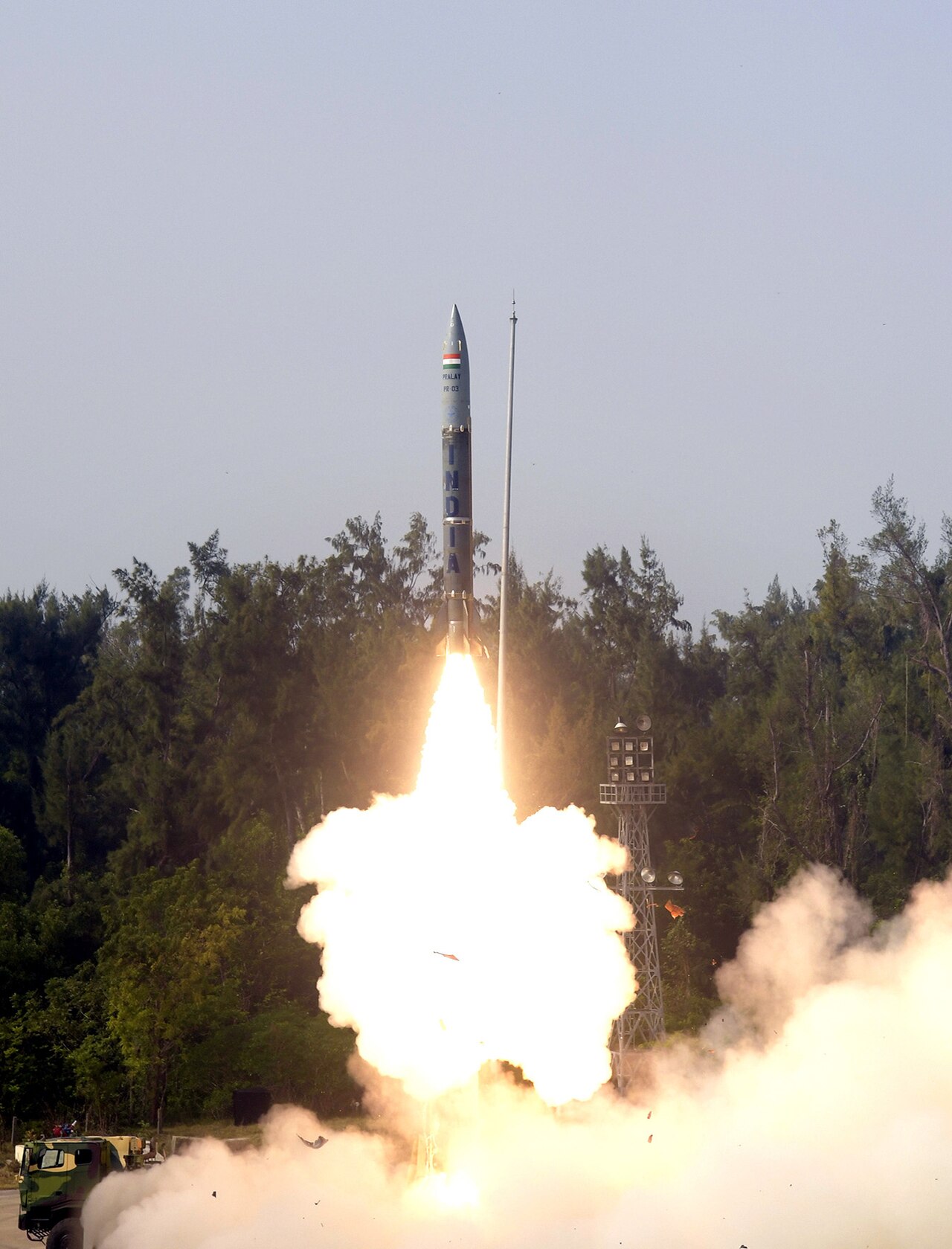
Armenia’s interest in the Pralay missile system represents a strategic attempt to offset this advantage by acquiring a precision strike capability that can threaten critical Azerbaijani assets, including air defense installations. The Pralay, developed by India’s Defence Research and Development Organisation (DRDO), is a solid-fueled, road-mobile, surface-to-surface tactical missile with a range of approximately 150-500 km, capable of delivering conventional or nuclear warheads with high accuracy. Its deployment could enhance Armenia’s deterrence posture and provide a counterbalance to Azerbaijan’s Israeli-backed air defense umbrella.
India’s Pralay Missile: Capabilities and Strategic Relevance
The Pralay missile embodies India’s advancing indigenous missile technology, featuring a quick reaction time, high mobility, and precision targeting enabled by advanced guidance systems. It is designed to engage a variety of targets including command centers, air defense systems, and other strategic military infrastructure.
For India, the export of Pralay to Armenia offers multiple strategic benefits:
- Demonstration of Indigenous Technology: Showcasing the Pralay in an active geopolitically sensitive region enhances the credibility of India’s defense technology on the global stage.
- Strengthening Defense Ties with Armenia: Defense cooperation can serve as a foundation for broader strategic partnership, including political and economic dimensions.
- Expanding Influence in Eurasia: Armenia’s location at the crossroads of Europe and Asia offers India a foothold in Eurasian security dynamics, complementing its existing engagements in Central Asia and West Asia.
India’s Emerging Role as a Defense Supplier in Sensitive Regions
Traditionally, India’s defense exports were limited and largely focused on close partners. However, recent years have seen a strategic push to broaden this footprint, particularly in regions where defense diplomacy can yield geopolitical dividends.
Armenia’s potential acquisition of the Pralay missile is emblematic of this trend. It reflects India’s willingness to engage in complex regional conflicts through arms sales and defense cooperation, a move that can enhance India’s influence but requires delicate balancing given the sensitivities involved.
Notably, India must navigate its relations with Israel, a key defense technology partner whose systems are currently employed by Azerbaijan. While Israel’s defense exports to Azerbaijan have been long-standing, India’s defense cooperation with Armenia indicates a nuanced approach to its trilateral engagements, balancing strategic interests with diplomatic pragmatism.
Similarly, Russia’s role as Armenia’s traditional security guarantor adds another layer of complexity. India’s expanding defense ties with Armenia may complement Russia’s regional presence but require coordination to avoid friction, especially as India maintains strong defense relations with both Russia and Israel.
Diplomatic and Security Benefits for India
Engagements such as the Pralay missile interest by Armenia yield several diplomatic and security advantages for India:
- Diversification of Defense Partnerships: Expanding defense ties beyond traditional partners enhances India’s global outreach and creates new strategic alignments.
- Enhanced Regional Influence: India’s presence in Eurasia and West Asia through defense exports supports its broader geopolitical ambitions, including connectivity initiatives and regional security cooperation.
- Economic Gains: Defense exports contribute to India’s indigenous defense industrial base, promoting ‘Make in India’ and fostering technological innovation.
- Strategic Signaling: Providing high-end defense systems to countries like Armenia signals India’s capability and willingness to be a security provider in contested regions.
Potential Impact on India’s Relations with Key Regional Actors
India’s defense diplomacy in Armenia must be viewed in the context of its broader relationships:
- With Israel: India’s defense cooperation with Israel remains robust, especially in areas like missile defense and UAV technology. However, supporting Armenia’s missile capabilities could introduce subtle tensions, necessitating diplomatic finesse.
- With Russia: As Armenia’s main security partner, Russia’s stance on India’s defense exports to Armenia is crucial. Collaborative approaches could strengthen trilateral ties, but unilateral moves risk strategic misunderstandings.
- With Azerbaijan and Turkey: Indian engagement with Armenia might be perceived unfavorably by Azerbaijan and Turkey, potentially complicating India’s diplomatic relations in the region.
- With West Asian and Eurasian States: India’s expanding defense exports can pave the way for deeper ties with other countries in these regions, aligning with its broader strategic interests.
Conclusion
Armenia’s consideration of India’s Pralay missile system to counter Azerbaijan’s Israeli-origin Barak air defense network marks a significant milestone in India’s defense diplomacy. It illustrates India’s growing role as a defense supplier in geopolitically sensitive regions and underscores the strategic benefits of expanding defense partnerships beyond traditional allies.
While this development offers India substantial diplomatic, economic, and security dividends, it also demands careful balancing of relations with key regional actors such as Israel and Russia. Ultimately, India’s engagement with Armenia through defense exports like the Pralay missile enhances its global defense footprint and reaffirms its ambition to be a pivotal security actor in Eurasia and West Asia.
Key Takeaways
- Armenia’s interest in India’s Pralay missile to counter Azerbaijan’s Israeli-origin Barak air defense system reflects a strategic effort to rebalance military capabilities in the Nagorno-Karabakh conflict.
- The Pralay missile’s advanced capabilities exemplify India’s indigenous technological progress and bolster its credentials as a defense exporter in sensitive geopolitical regions.
- India’s defense diplomacy with Armenia expands its influence in Eurasia and West Asia, offering diplomatic and economic benefits while necessitating careful management of relations with Israel, Russia, and other regional stakeholders.
Sources
- “Armenia Considers Indian Pralay Missiles to Counter Azerbaijan’s Israeli-Origin Barak Air Defence Network,” Defence News India, 2026-02-21. Link
- DRDO Official, “Dte of TDF, DRDO invites applications,” 2026-02-21. Link
- The Diplomat, Various articles on Eurasian and West Asian geopolitical dynamics, 2026.