Introduction
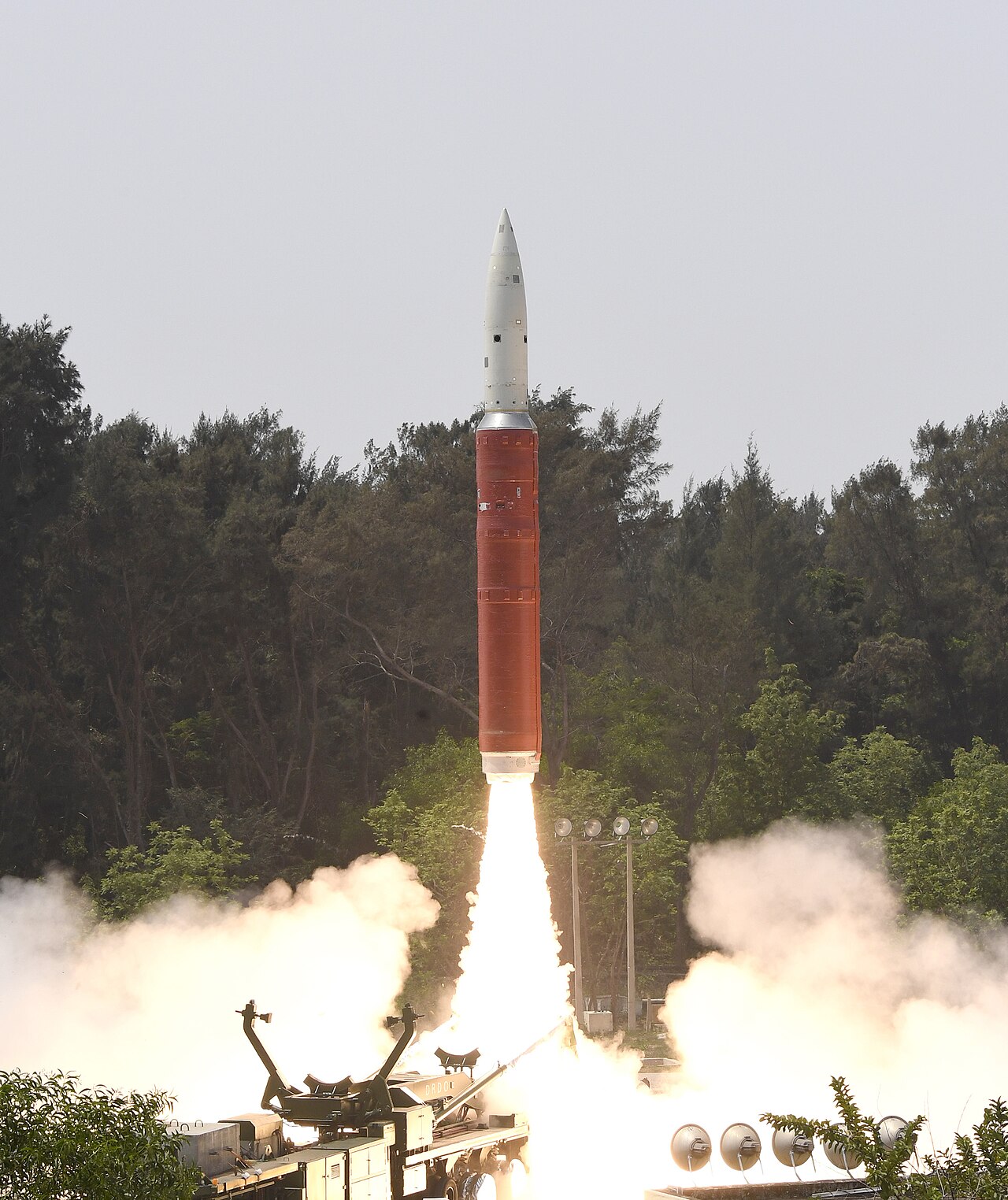
In the evolving landscape of modern warfare, hypersonic missile technology represents a significant leap forward in strike capabilities, combining unprecedented speed, maneuverability, and precision. India’s Defence Research and Development Organisation (DRDO) has been at the forefront of developing indigenous advanced missile systems, and its Long Range Air-Launched Surface-to-Hypersonic Missile (LRAShM) program is a critical component of this effort. Recent developments indicate an expansion of the LRAShM program to incorporate dedicated surface strike variants tailored for the Indian Army and Air Force, highlighting India’s intent to bolster its multi-domain operational reach.
This article offers a detailed analysis of the LRAShM program’s technical features, development trajectory, and strategic significance within India’s defense framework, while situating it in the context of global hypersonic missile trends.
LRAShM Hypersonic Missile: Technical Features and Innovations
The LRAShM project aims to develop a state-of-the-art hypersonic missile capable of speeds exceeding Mach 5, designed initially as an air-launched platform from the Indian Air Force’s frontline fighters, such as the Su-30MKI and the upcoming AMCA. Hypersonic weapons, by virtue of their speed and maneuverability, pose a formidable challenge to current missile defense systems.
Key technological innovations embedded in LRAShM include:
- Scramjet propulsion enabling sustained hypersonic flight at altitudes ranging from near-surface to the edge of the stratosphere, enhancing range and survivability.
- Advanced guidance and navigation systems incorporating inertial navigation coupled with satellite-based augmentation for precise strike accuracy.
- High maneuverability through aerodynamic control surfaces and thrust vectoring, allowing the missile to evade interception and engage mobile or fortified targets.
- Compact design for integration with multiple launch platforms, facilitating deployment flexibility.
The emerging surface strike variants are engineered for ground and naval platforms, expanding the missile’s applicability beyond air-launch. This modular approach underscores DRDO’s emphasis on adaptability across services, augmenting the Army’s long-range precision-strike capability and enabling the Air Force to conduct stand-off attacks with enhanced lethality.
Development Milestones and Projected Testing Schedule
The LRAShM program has progressed through several critical phases since its inception:
- Early concept validation and propulsion tests were completed by 2023, establishing baseline scramjet performance.
- Prototype development and captive carry trials by 2024-2025 with the Su-30MKI, demonstrating aerodynamic stability and release mechanisms.
- Initial hypersonic flight tests are reported to have commenced in late 2025, focusing on validating flight trajectories and guidance systems.
According to recent reports from Defence News India (2026), DRDO is actively expanding the LRAShM program to include surface strike variants, with a projected testing schedule for these new configurations slated for the latter half of 2026 and into 2027. This phase will be pivotal in integrating the missile with mobile launchers and ground command systems, ensuring interoperability with Army and Air Force operational doctrines.
Comparison with International Hypersonic Missile Programs
Globally, hypersonic missile development is a high priority for leading military powers due to the paradigm shift these weapons introduce in strategic deterrence and conventional strike capabilities.
- United States has operationalized the AGM-183A Air-launched Rapid Response Weapon (ARRW) and is advancing the Hypersonic Conventional Strike Weapon (HCSW).
- Russia fields the Avangard hypersonic glide vehicle and the Kinzhal air-launched ballistic missile.
- China is progressing with its DF-ZF hypersonic glide vehicles and air-launched hypersonic missiles.
India’s LRAShM situates itself competitively within this landscape by emphasizing indigenous technologies and service-specific variants, which is crucial given India’s unique geopolitical challenges. Unlike some counterparts focusing primarily on strategic deterrence, LRAShM’s surface strike variants reflect an operational focus on battlefield utility and tactical flexibility.
Strategic and Operational Implications for India
The induction of LRAShM and its surface strike variants is poised to enhance India’s multi-domain operational capabilities significantly:
- Enhanced deterrence posture: Hypersonic missiles complicate adversary defense planning due to their speed and maneuverability, thus strengthening India’s deterrence calculus vis-à-vis China and Pakistan.
- Precision deep strike: The ability to engage high-value targets deep within enemy territory with minimal warning time will bolster the Indian Army’s conventional warfighting options.
- Air Force stand-off capability: LRAShM’s air-launched role allows the IAF to maintain a layered strike capability without exposing manned platforms to advanced enemy air defenses.
- Cross-domain synergy: Surface strike variants will enable the integration of hypersonic assets across land, air, and potentially naval platforms, supporting joint operations and network-centric warfare.
- Border security and rapid response: Given the volatile security environment along India’s northern and eastern borders, hypersonic weapons offer a critical advantage in rapid, precision strikes to neutralize emerging threats.
Geopolitical Context and Future Outlook
India’s push in hypersonic missile technology aligns with its broader strategic objectives of self-reliance (Atmanirbhar Bharat) and operational readiness to counter regional security challenges. The geopolitical dynamics with China, marked by ongoing border disputes and military modernization, make the LRAShM program a timely addition to India’s defense arsenal.
Furthermore, as the global hypersonic arms race intensifies, India’s indigenous capabilities will contribute to strategic stability by providing credible second-strike and conventional precision strike options without over-reliance on foreign technology transfers.
The DRDO’s engagement with academia, retired scientists, and industry professionals—as indicated by recent empanelment drives for defense specialists—suggests a collaborative approach to overcoming technological hurdles and accelerating program maturity. The incorporation of digital certification processes (e.g., CEMILAC’s e-Certification Portal) will further streamline weapon system qualification and deployment.
Conclusion
The expansion of the LRAShM hypersonic missile program with dedicated surface strike variants marks a significant milestone in India’s defense modernization trajectory. By integrating cutting-edge propulsion, guidance, and platform adaptability, DRDO is positioning India as a credible player in the global hypersonic domain.
This development not only enhances India’s conventional and strategic deterrence but also strengthens its ability to conduct rapid, precise, and survivable strikes across multiple domains. As testing advances and operational deployment approaches, LRAShM will become a cornerstone of India’s future battlefield architecture, contributing decisively to national security and regional stability.
Key Takeaways
- DRDO’s LRAShM program is pioneering India’s indigenous hypersonic missile development with innovative scramjet propulsion and advanced guidance systems.
- The introduction of surface strike variants tailored for the Army and Air Force will expand operational versatility and multi-domain integration.
- LRAShM’s capabilities are competitive with global hypersonic programs, providing India with enhanced deterrence and precision strike options amid complex regional security challenges.
Sources
- Defence News India, “DRDO to Expand LRAShM Hypersonic Programme With Dedicated Surface Strike Variants For Army And Air Force,” 2026. Link
- DRDO Official Website, Technology Offerings and Schemes, 2026. Link
- DRDO Official Website, Defence Specialist Empanelment Notice, 2026. Link
- CEMILAC e-Certification Portal, 2026. Link
- ANI News - Defence, various reports, 2026.