Introduction
The escalating conflict between Iran and Gulf Cooperation Council (GCC) states, particularly Saudi Arabia, has emerged as a significant stress test for India’s strategic autonomy. New Delhi’s foreign policy, traditionally anchored in non-alignment and multi-vector diplomacy, faces unprecedented challenges amid intensifying regional tensions, energy security concerns, and shifting alliances in the Middle East. This article examines India’s so-called “Iran blind spot,” its historical and contemporary ties with Tehran and the Gulf states, and the implications for India’s defense strategy, military preparedness, and geopolitical posture.
Historical Context and India’s Energy Dependency
India’s relationship with Iran dates back decades, rooted in cultural, economic, and strategic engagements. Tehran has been a crucial partner in India’s energy mix, with Iran historically supplying around 10-15% of India’s crude oil imports. The development of the Chabahar Port, designed to provide India access to Afghanistan and Central Asia bypassing Pakistan, symbolizes India’s strategic interest in Iran as a gateway to broader regional connectivity.
Concurrently, India’s energy dependency on Gulf countries is even more pronounced. The GCC, particularly Saudi Arabia, the United Arab Emirates, and Kuwait, collectively supply approximately two-thirds of India’s oil imports. The Gulf region is also a critical hub for India’s expatriate workforce, whose remittances underpin India’s economic stability.
This dual dependency creates a complex matrix for India’s foreign policy. As Saudi Foreign Minister Prince Faisal bin Farhan Al Saud recently warned, patience with Iranian aggression “is not unlimited” (ANI News, 2026), underscoring the heightened risks of further conflict escalation. For India, balancing these relationships without alienating either party is an intricate diplomatic challenge.
Diplomatic Pressures and the Limits of Non-Alignment
India’s longstanding approach to Middle Eastern conflicts has been characterized by cautious neutrality, seeking to avoid entanglement while safeguarding its strategic interests. However, the rapid deterioration of the Iran-Gulf situation exposes the limitations of this hands-off stance.
New Delhi probably hoped that the conflict would be short-lived, allowing it to maintain distance without taking sides. As noted in a recent analysis from The Diplomat (2026), this expectation has not materialized, forcing India to navigate an increasingly polarized environment. Diplomatic pressures from Gulf states, alongside close strategic partners like the United States, demand clearer positioning, especially on issues of security cooperation and sanctions compliance.
India’s refusal to overtly condemn Iran or join Western-led containment measures stems from multiple factors: preserving access to Iranian energy supplies, protecting long-term infrastructure projects like Chabahar, and maintaining its strategic autonomy amid superpower rivalries. However, this balancing act risks being perceived as an “Iran blind spot” that could erode India’s influence in Gulf Arab capitals and Washington alike.
Risks to India’s Security and Trade Routes
The Gulf region is a linchpin for India’s security and economic interests. Instability there directly threatens critical maritime routes, including the Strait of Hormuz, through which nearly 55% of India’s oil imports transit. Escalation of hostilities risks blockades, attacks on shipping, and disruption of trade flows vital for India’s energy security and economic growth.
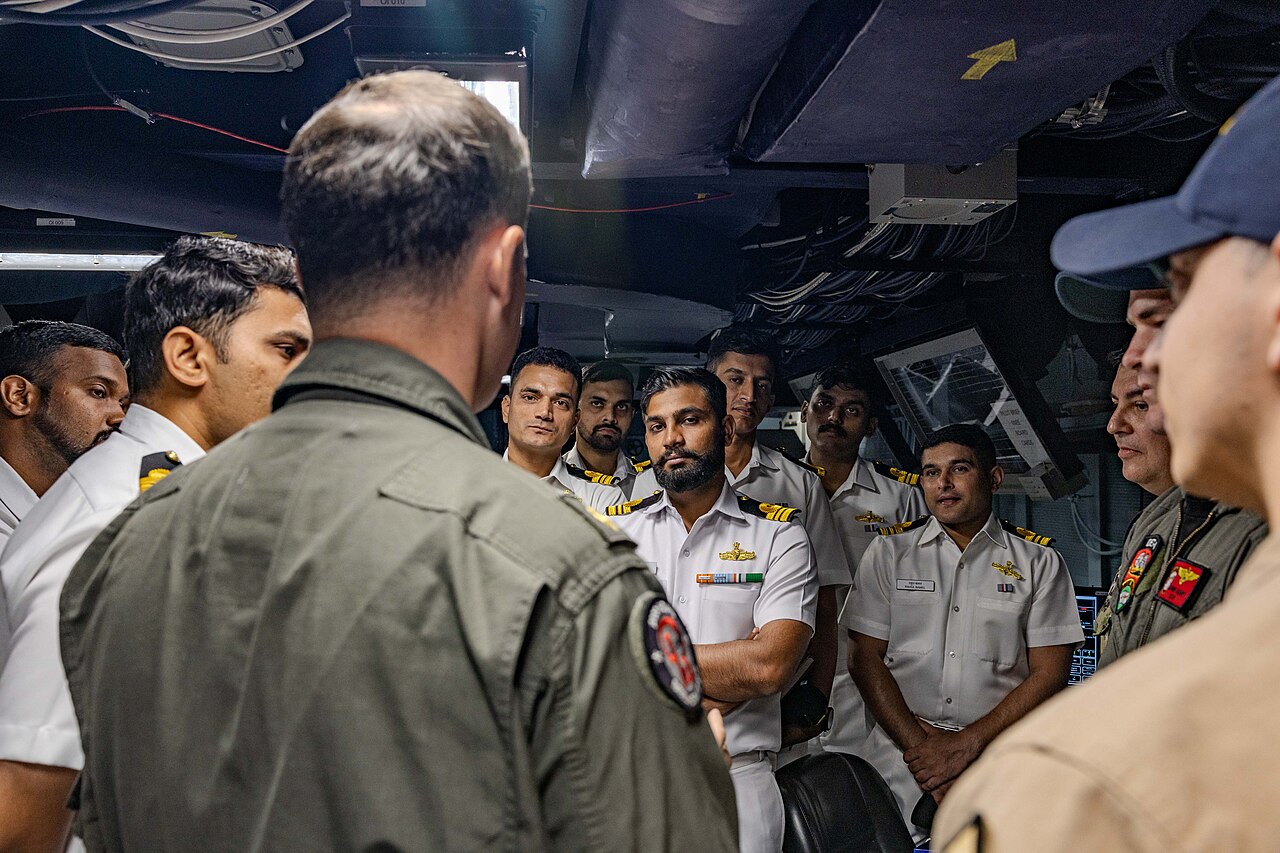
India’s military has increased its presence in the Indian Ocean Region (IOR) and Gulf waters, conducting regular naval patrols and joint exercises with partner navies to ensure the security of sea lines of communication (SLOCs). The Indian Navy’s capabilities — including advanced stealth frigates, missile destroyers equipped with BrahMos supersonic cruise missiles, and tanker support ships — are integral to safeguarding these routes.
Yet, the evolving conflict underscores the need for enhanced maritime domain awareness and rapid response capabilities. The possibility of asymmetric threats such as drone attacks or maritime mines in the Gulf adds complexity to India’s defense calculus. Moreover, India must consider the potential spillover of instability from the Gulf into the wider region, which could exacerbate security challenges along its western borders and complicate existing threats from Pakistan and Afghanistan.
Defense Diplomacy: Opportunities and Challenges
The shifting alliances in the Middle East present both opportunities and challenges for India’s defense diplomacy. India’s growing defense ties with Gulf countries—ranging from arms sales to joint training and intelligence sharing—have accelerated in recent years. Several GCC states have acquired Indian-origin defense technologies and are cooperating on counterterrorism and maritime security initiatives.
At the same time, India’s defense engagement with Iran remains constrained by international sanctions and geopolitical pressures. Nonetheless, Iran’s strategic location and capabilities in missile technology and asymmetric warfare offer avenues for limited cooperation in areas such as border security and counterterrorism.
India’s ability to leverage its defense technology base—highlighted by indigenous programs like the DRDO’s BrahMos missile system and the ongoing development of the Advanced Medium Combat Aircraft (AMCA) (Defence News India, 2026)—can enhance its position as a reliable partner in the region. However, maintaining a balanced approach requires deft diplomacy to avoid alienating any party and preserving India’s strategic autonomy.
Geopolitical Implications for India’s Defense Posture
India’s strategic autonomy is increasingly tested by the Iran-Gulf conflict’s ripple effects on regional security architectures. The United States’ deepening involvement and calls for allied support in securing Gulf waters place India in a delicate position, balancing its partnerships with Washington and regional players.
Furthermore, the conflict accelerates the realignment of Middle Eastern alliances, with countries like Saudi Arabia and the UAE expanding ties with Israel and deepening security cooperation with the US. India must navigate these evolving dynamics without compromising its historical ties with Iran and its own geopolitical objectives.
From a defense perspective, India may need to reassess its force posture and capabilities in the IOR and beyond. Strengthening strategic partnerships, enhancing intelligence sharing, and developing rapid deployment capabilities will be crucial to safeguard India’s interests in an uncertain regional environment.
Conclusion
The Iran-Gulf conflict underscores the complexities of India’s strategic autonomy in a multipolar world. Balancing historical ties with Iran against growing dependencies and partnerships with Gulf states demands nuanced diplomacy backed by credible defense capabilities. India’s energy security, trade routes, and regional influence are inextricably linked to stability in the Middle East, making this conflict a litmus test for New Delhi’s foreign policy resilience.
By investing in indigenous defense technology, enhancing maritime security, and pursuing pragmatic diplomacy, India can navigate this challenging landscape while preserving its strategic autonomy and advancing its long-term security interests.
Key Takeaways
- India’s dual energy dependency on Iran and Gulf states complicates its foreign policy amid rising Iran-Gulf tensions.
- The conflict exposes the limits of India’s traditional non-alignment, requiring more nuanced diplomatic engagement and defense preparedness.
- Instability in the Gulf threatens India’s critical trade routes and necessitates enhanced maritime security and rapid response capabilities.
- Evolving Middle Eastern alliances provide both opportunities and challenges for India’s defense diplomacy and geopolitical posture.
- Strengthening indigenous weapons programs and strategic partnerships is vital for India to maintain its strategic autonomy in a volatile regional environment.
Sources
- “India’s Iran Blind Spot and the Gulf War: A Litmus Test of Strategic Autonomy,” The Diplomat, 2026-03-19, https://thediplomat.com/2026/03/indias-iran-blind-spot-and-the-gulf-war-a-litmus-test-of-strategic-autonomy/
- “Saudi FM warns patience with Iranian aggression ‘not unlimited’,” ANI News - Defence, 2026-03-19, https://www.aninews.in/news/world/middle-east/saudi-fm-warns-patience-with-iranian-aggression-not-unlimited20260319065508
- “How L1 Bias and Low Pay for Engineers Threaten India’s 5th-Gen AMCA Program,” Defence News India, 2026-03-19, https://www.defencenews.in/threads/how-l1-bias-and-low-pay-for-engineers-threaten-indias-5th-gen-amca-program-warns-former-senior-army-officer.17212/