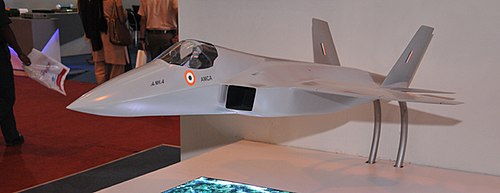
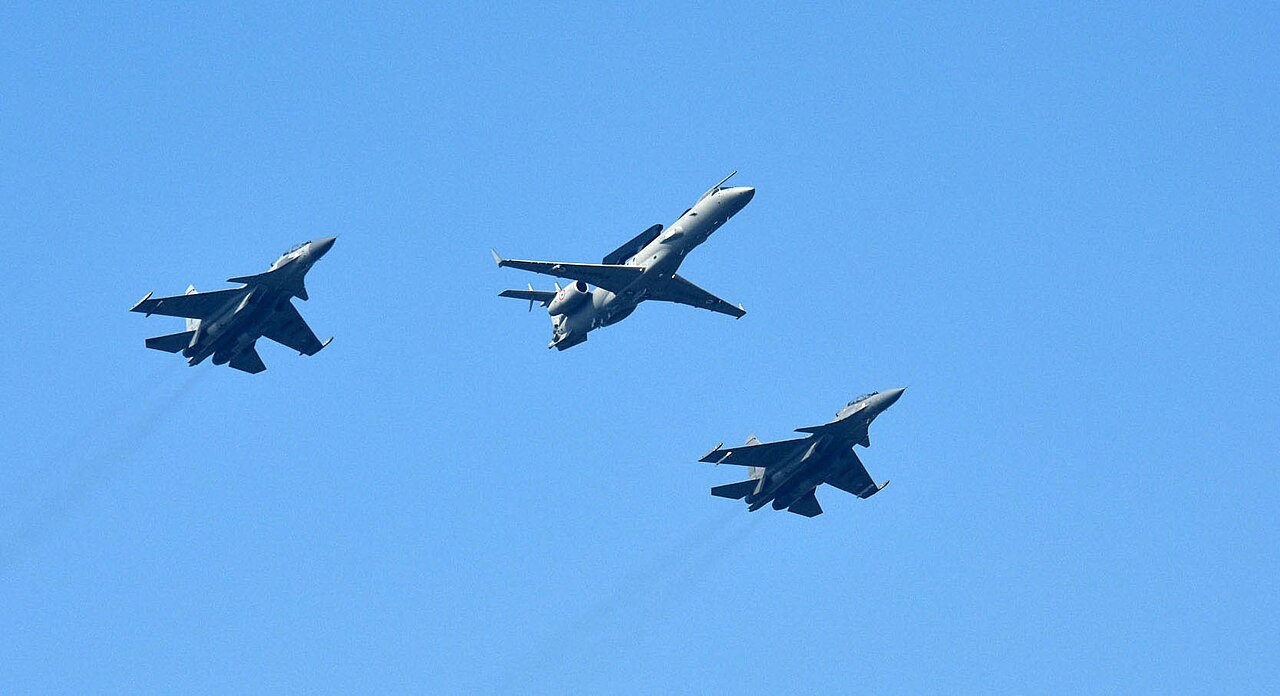
India’s ambition to establish a credible indigenous stealth fighter capability is increasingly anchored on its ability to develop and validate advanced aero-engine technologies domestically. In this context, the Gas Turbine Research Establishment’s (GTRE) upcoming high-altitude aero-engine test facility in Telangana emerges as a watershed development. The new infrastructure is designed to simulate the challenging operational conditions faced by engines at high altitudes, a critical step for the successful maturation of stealth aero-engines intended for the Advanced Medium Combat Aircraft (AMCA) Mk-2 and beyond.
This blog post provides a comprehensive assessment of GTRE’s test facility, detailing its technical significance, expected development timelines for AMCA Mk-2’s indigenous engine, and its broader implications for India’s future aerospace and defense industrial base.
High-Altitude Testing: Why It Matters for Stealth Aero-Engines
Modern stealth fighters operate with stringent performance and survivability requirements, mandating engines that deliver superior thrust-to-weight ratios, fuel efficiency, and low observability (reduced infrared and radar signatures). Testing these engines under simulated high-altitude conditions — characterized by low air density, extreme temperatures, and variable pressures — is essential to validate their operational reliability, durability, and stealth features.
GTRE’s new test facility will replicate these environmental conditions, enabling:
- Performance validation under thin atmosphere: Ensuring the engine maintains thrust and efficiency at altitudes exceeding 40,000 feet.
- Thermal management assessment: Critical for stealth engines that incorporate advanced cooling techniques to mask infrared signatures.
- Durability and endurance testing: Simulating prolonged high-altitude missions to identify potential failure modes.
- Stealth technology integration: Evaluating the impact of stealth features such as serrated nozzles and infrared suppressors on engine performance.
Such sophisticated testing infrastructure is indispensable for pushing the envelope of indigenous aero-engine design, especially for the AMCA Mk-2, which aims to incorporate next-generation stealth features and enhanced propulsion systems.
AMCA Mk-2 Engine Development: Timelines and Testing Milestones
The AMCA program, India’s flagship fifth-generation stealth fighter initiative, is planned in multiple phases, with Mk-1 focusing on initial stealth and combat capabilities and Mk-2 envisioned to incorporate advanced indigenous technologies, including a locally developed engine.
- Current Status: The AMCA Mk-1 is slated for first flight by the late 2020s, powered by foreign-sourced engines as an interim solution.
- Indigenous Engine Milestone: The indigenous stealth engine for AMCA Mk-2, developed primarily by GTRE in collaboration with DRDO and HAL, is targeted for ground testing in the early-to-mid 2030s.
- High-Altitude Testing Role: The Telangana test facility will become operational in the coming years, aligning with key engine development phases to support full-scale testing, validation, and eventual integration with the AMCA Mk-2 airframe.
The facility accelerates the technology readiness level (TRL) of the indigenous engine by enabling comprehensive developmental and acceptance testing domestically, reducing reliance on foreign test ranges and infrastructure.
GTRE, DRDO, and HAL: Synergizing Indigenous Aero-Engine Efforts
The GTRE, under DRDO, has been the cornerstone of India’s gas turbine and aero-engine development programs for decades. The new test facility exemplifies a collaborative ecosystem involving:
- GTRE: Leading the design, development, and ground testing of core engine components and full engine assemblies.
- DRDO: Providing overarching research, materials science, and stealth technology integration support.
- HAL (Hindustan Aeronautics Limited): Responsible for engine manufacturing, assembly, and integration with the AMCA airframe.
This triad synergy enhances indigenous capability by combining research expertise, industrial production capacity, and operational know-how. The high-altitude test facility is a tangible manifestation of this integrated approach, designed to nurture self-reliance in critical aero-engine propulsion technology—a domain historically dominated by global aerospace powers.
Strategic and Geopolitical Significance for India’s Defense Posture
Indigenizing stealth engine technology is a strategic imperative for India, given the complex security environment marked by near-peer competitors with advanced stealth fighter fleets.
- Operational Autonomy: Indigenous engine development ensures that India is not dependent on foreign suppliers for critical propulsion technology, circumventing potential embargoes or technology denial regimes.
- Force Multiplier: The AMCA Mk-2, powered by a stealth-optimized indigenous engine, will significantly enhance India’s air combat capabilities, allowing for greater payload, range, and survivability.
- Aerospace Industrial Growth: The high-altitude test infrastructure will catalyze downstream industrial activities, including precision manufacturing, materials development, and aerospace systems integration, boosting the domestic defense ecosystem.
- Regional Balance: As China continues to advance its fifth-generation fighter programs with indigenous engines, India’s parallel progress through GTRE’s efforts helps maintain air superiority balance in the Indo-Pacific region.
Moreover, the facility will underpin future aero-engine projects beyond AMCA Mk-2, including unmanned combat aerial vehicles (UCAVs) and next-generation fighter concepts, aligning with India’s long-term defense modernization roadmap.
Conclusion
GTRE’s high-altitude aero-engine test facility in Telangana is a landmark development in India’s quest for aerospace self-reliance. By enabling rigorous testing of indigenous stealth engines under realistic environmental conditions, it will play a pivotal role in powering the AMCA Mk-2 and future stealth platforms. This infrastructure not only accelerates critical technology maturation but also strengthens India’s strategic autonomy in defense propulsion—a cornerstone for future air combat dominance.
As India’s aerospace technology ecosystem evolves with DRDO’s support and HAL’s industrial capabilities, the Telangana facility positions the nation on a path toward technological parity with global aerospace leaders, reinforcing India’s stature as a formidable defense innovation hub.
Key Takeaways
- GTRE’s new high-altitude test facility is crucial for validating indigenous stealth aero-engines under realistic environmental conditions, enhancing engine performance and stealth capabilities.
- The facility supports key development milestones for the AMCA Mk-2’s indigenous engine, targeting ground testing and integration in the early-to-mid 2030s.
- Collaborative efforts between GTRE, DRDO, and HAL underpin India’s drive for self-reliance in critical aero-engine propulsion technologies.
- The infrastructure strengthens India’s strategic autonomy, boosts aerospace industrial growth, and enhances regional air combat capabilities amid evolving security challenges.
Sources
- Defence News India, “GTRE Plans Massive High-Altitude Aero-Engine Test Facility in Telangana for AMCA Mk-2 and Future Stealth Engines,” 2026.03.26. https://www.defencenews.in/threads/gtre-plans-massive-high-altitude-aero-engine-test-facility-in-telangana-for-amca-mk-2-and-future-stealth-engines.17278/
- DRDO Official, “International Conference on Autonomous Aerial Vehicles ICAAV - 2026,” 2026.03.26. https://www.drdo.gov.in/drdo/en/announcement/international-conference-autonomous-aerial-vehicles-icaav-2026-20-21-aug-2026-jointly
- IDSA, “Op-eds and Articles,” 2026.03.26. https://idsa.in/mpidsanews/ajey-leles-article-navic-indias-jinxed-navigational-program-or-a-cornerstone-of-indias-misplaced-space-priorities-published-in-the-spa