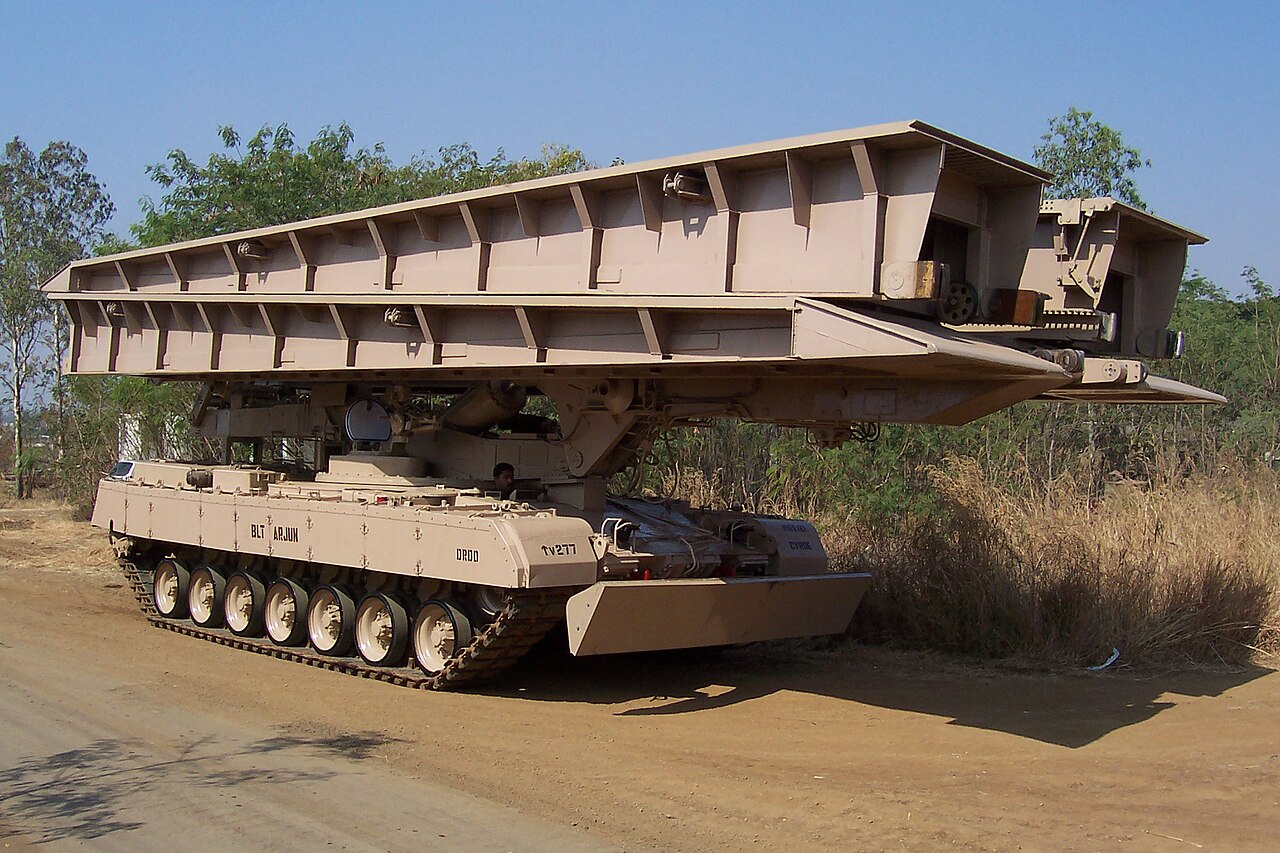
Overview
The Arjun Mk II is the latest iteration of India’s indigenous main battle tank (MBT) family, developed by the Defence Research and Development Organisation (DRDO) to meet the evolving operational needs of the Indian Army. Building upon the foundation laid by the original Arjun Mk I, the Mk II variant integrates cutting-edge technology, improved survivability, enhanced firepower, and superior mobility to maintain battlefield dominance in modern mechanized warfare. The tank embodies India’s strategic push towards self-reliance in defense manufacturing and showcases significant domestic innovation in armored vehicle design.
Designed to operate across diverse terrains from deserts to high-altitude mountain passes, the Arjun Mk II features state-of-the-art composite armor augmented with Explosive Reactive Armor (ERA) modules, substantially increasing crew survivability against kinetic energy penetrators and shaped charges. Its 120mm rifled main gun, upgraded fire control system, and advanced sensors provide superior target acquisition, tracking, and engagement capabilities, including night-fighting and all-weather operations. Enhanced communication and battlefield management systems enable seamless integration into network-centric warfare environments, improving situational awareness and command responsiveness.
The Arjun Mk II is a strategic asset for the Indian Army’s armored regiments, designed to replace aging T-72 and T-90 tanks over time. This MBT not only reinforces India’s defense industrial base but also elevates the country’s armored warfare capabilities to meet 21st-century combat challenges, emphasizing indigenous technology and operational versatility.
Specifications
| Parameter | Details |
|---|---|
| Type | Main Battle Tank (MBT) |
| Manufacturer | DRDO / Heavy Vehicles Factory (HVF), Avadi |
| Crew | 4 (Commander, Gunner, Loader, Driver) |
| Weight | Approx. 68-72 tonnes |
| Length | 9.77 m (with gun forward) |
| Width | 3.7 m |
| Height | 2.4 m |
| Chassis | Welded steel and composite armor + ERA |
| Armor | Modular composite armor with ERA |
| Main Armament | 120mm rifled gun with indigenously developed APFSDS and HEAT shells |
| Secondary Armament | 7.62 mm coaxial machine gun; 12.7 mm anti-aircraft MG |
| Engine | MTU Friedrichshafen 838 Ka-501 turbocharged diesel engine (approx. 1,400 hp) |
| Power-to-Weight Ratio | Approx. 20 hp/tonne |
| Suspension | Torsion bar with hydropneumatic units |
| Maximum Speed | 70 km/h (road) |
| Operational Range | 450 km |
| Fire Control System | Advanced digital FCS with thermal imaging, laser rangefinder, ballistic computer |
| Target Acquisition | Day/night capability with thermal imaging and CCD cameras |
| Navigation | GPS and inertial navigation system |
| Communication | Integrated battlefield management and secure radio systems |
| Night Fighting Capability | Yes, with thermal sights and night vision devices |
| NBC Protection | Full Nuclear, Biological, Chemical (NBC) protection system |
| Additional Features | Laser warning system, smoke grenade launchers, automatic fire suppression system |
Key Features
🚀 Enhanced Firepower and Fire Control
- 120mm rifled main gun capable of firing a wide range of indigenously developed ammunition including APFSDS, HEAT, and programmable rounds.
- Advanced fire control system with integrated thermal imaging, laser rangefinding, and ballistic computation ensures high first-round hit probability.
- Stabilized gun platform allows firing on the move with precision.
🛡️ Superior Protection and Survivability
- Composite armor integrated with latest Explosive Reactive Armor (ERA) modules offers robust protection against kinetic and chemical energy threats.
- Equipped with laser warning receivers and automatic countermeasure systems to detect and respond to incoming threats.
- NBC protection and automatic fire suppression systems enhance crew survivability in hostile environments.
🎯 Advanced Target Acquisition and Night Fighting
- State-of-the-art day/night vision systems including thermal imagers and CCD cameras provide all-weather operational capability.
- Digital battlefield management system enables real-time sharing of tactical data, improving coordination and situational awareness.
- Integrated GPS and inertial navigation ensure precise maneuvering in complex terrain.
Variants
| Variant | Description |
|---|---|
| Arjun Mk I | Original version with standard composite armor and baseline fire control system. |
| Arjun Mk II | Upgraded variant featuring enhanced armor with ERA, more powerful engine, and advanced electronics. |
| Arjun Mk II (Export) | Proposed export version with customized features to meet international customer requirements. |
Operational Status
The Arjun Mk II is currently in limited production and undergoing induction trials with the Indian Army’s armored regiments. Initial units have been deployed in select armored formations, primarily in northern and western sectors. The Indian Army plans a phased induction to gradually replace older T-72 tanks in frontline units. Production is carried out at the Heavy Vehicles Factory (HVF), Avadi, with ongoing efforts to scale up manufacturing and improve indigenous content. The tank has also been showcased in military parades and defense expos as a symbol of India’s armored warfare modernization.
Development Timeline
| Year | Milestone |
|---|---|
| 1986 | Initial Arjun MBT development project launched by DRDO |
| 2004 | Arjun Mk I inducted into Indian Army |
| 2013 | Development of Arjun Mk II variant commenced |
| 2017 | Arjun Mk II prototype trials completed |
| 2020 | User trials and army evaluations for Arjun Mk II |
| 2023 | Limited series production and initial induction began |
| 2025 | Full-rate production expected to ramp up |
Strategic Significance
The Arjun Mk II represents a critical step in India’s strategic objective of defense self-reliance, reducing dependence on foreign suppliers for key armored vehicles. Its indigenous design and manufacturing strengthen India’s defense industrial base while providing the Indian Army with a modern MBT capable of countering evolving threats along its borders. The tank’s advanced protection and firepower enhance deterrence against peer adversaries and improve operational effectiveness in multi-domain battlefields. The integration of digital battlefield management aligns India’s armored forces with modern network-centric warfare doctrines, ensuring interoperability with other branches and platforms.
Future Upgrades
- Integration of Active Protection Systems (APS) to intercept anti-tank guided missiles and rocket-propelled grenades.
- Upgraded digital architecture for enhanced cyber and electronic warfare resilience.
- Development of improved ammunition types, including programmable airburst rounds.
- Potential hybrid or electric drive systems to improve fuel efficiency and reduce thermal signature.
- Enhanced situational awareness using Artificial Intelligence-assisted target recognition and threat analysis.
Comparison Table
| Feature | Arjun Mk II | T-90 Bhishma | Russian T-14 Armata |
|---|---|---|---|
| Origin | India (Indigenous) | Russia (Licensed production in India) | Russia |
| Weight | 68-72 tonnes | ~46.5 tonnes | ~48 tonnes |
| Main Gun | 120mm rifled gun | 125mm smoothbore | 125mm smoothbore |
| Engine Power | ~1,400 hp | 1,000 hp | 1,500 hp |
| Armor | Composite + ERA | Composite + ERA | Composite + Active Protection System |
| Fire Control System | Advanced digital FCS | Modern digital FCS | Advanced digital FCS with AI |
| Night Fighting | Thermal imaging & night vision | Thermal imaging & night vision | Advanced multi-sensor suite |
| Crew | 4 | 3 | 3 |
| Indigenous Content | High | Medium | Low |
| Operational Range | 450 km | 550 km | 500 km |
Key Takeaways
- ✅ Indigenous Development: The Arjun Mk II is a testament to India’s growing expertise in armored vehicle design and manufacturing.
- 🎯 Enhanced Lethality: Advanced fire control and 120mm rifled gun provide superior accuracy and firepower.
- 🛡️ Improved Survivability: Composite armor combined with Explosive Reactive Armor significantly boosts crew protection.
- 💪 Modern Battlefield Integration: Integrated battlefield management and communication systems enhance situational awareness.
- 🚀 Versatility: Designed for diverse terrain operations, including deserts and high-altitude environments.
- 🔄 Future-ready: Planned upgrades include Active Protection Systems and AI-assisted targeting.
Last updated: February 2026
Status: Limited induction with Indian Army; production scaling underway
Deployment: Northern and Western sectors; phased replacement of legacy tanks ongoing.