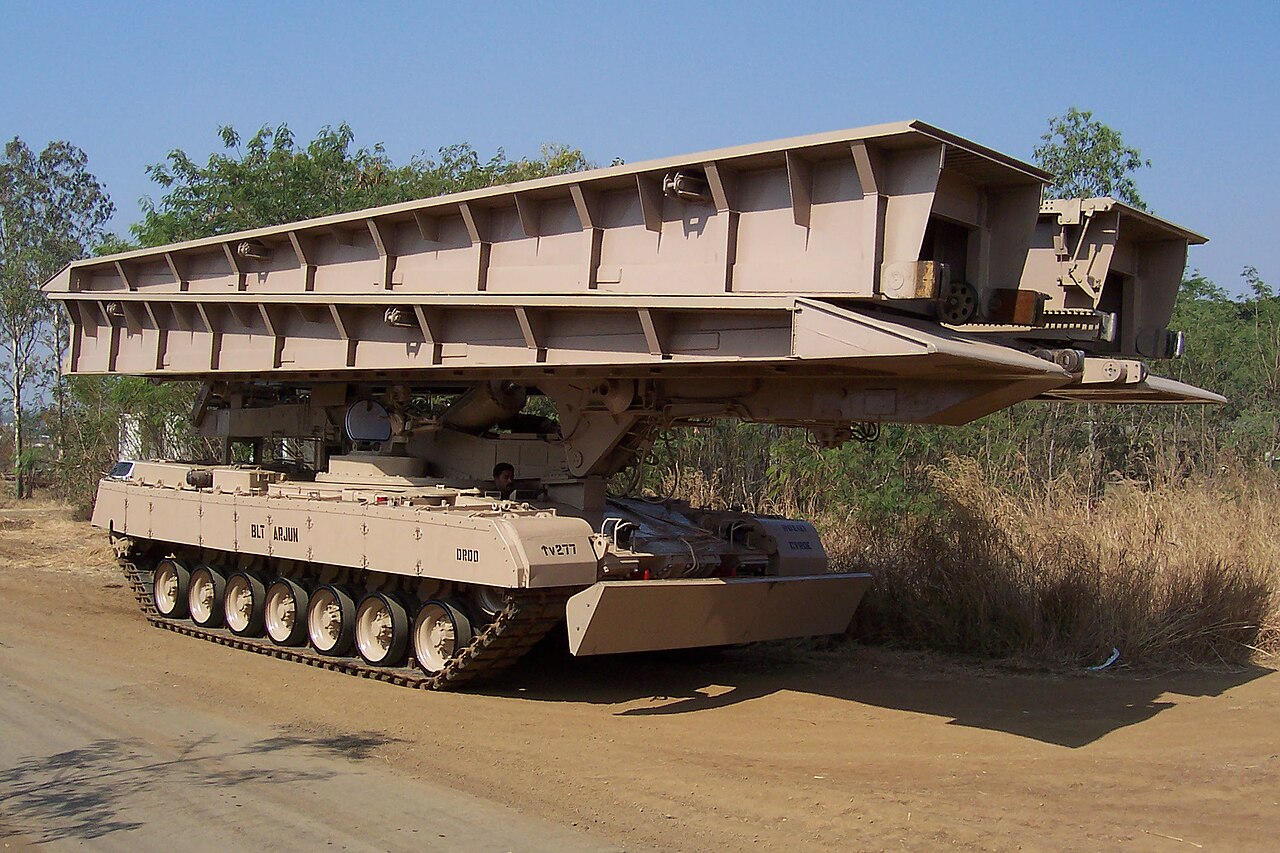
Overview
The Arjun Mk2 is the latest upgraded iteration of India’s indigenous main battle tank (MBT) developed by the Defence Research and Development Organisation (DRDO) and produced by the Heavy Vehicles Factory (HVF), Avadi. Conceived as a successor to the original Arjun Mk1, the Mk2 variant incorporates significant enhancements in armor protection, firepower, mobility, and situational awareness to meet modern battlefield requirements. It is a testament to India’s ambition to achieve self-reliance in critical defense technologies and reduce dependence on foreign MBTs such as the Russian-origin T-90s currently in service.
Designed for high-intensity mechanized warfare, the Arjun Mk2 integrates state-of-the-art Explosive Reactive Armor (ERA), an upgraded 120mm main gun with advanced fire control systems, a more powerful and reliable engine, and an integrated battlefield management system (BMS). These improvements provide the tank with superior survivability, lethality, and crew efficiency compared to its predecessor. The tank is optimized for varied terrains including deserts, plains, and mountainous regions, making it suitable for deployment along India’s diverse borders.
The development of the Arjun Mk2 aligns with India’s strategic objectives of modernizing armored forces and promoting indigenous defense production under the Make in India initiative. By leveraging advanced materials, electronics, and modular design, the Arjun Mk2 offers a cost-effective solution tailored to the Indian Army’s operational doctrines and logistics frameworks. The tank has undergone extensive trials and is gradually being inducted to complement existing armored regiments, thereby enhancing the overall combat power of India’s ground forces.
Specifications
| Parameter | Details |
|---|---|
| Type | Main Battle Tank (MBT) |
| Manufacturer | Defence Research and Development Organisation (DRDO), Heavy Vehicles Factory (HVF) |
| Crew | 4 (Commander, Gunner, Loader, Driver) |
| Weight | Approx. 68 tonnes |
| Length | 9.77 m (including gun barrel) |
| Width | 3.6 m |
| Height | 2.4 m |
| Engine | Diesel engine, 1,400 hp (upgraded from Mk1’s 1,320 hp) |
| Maximum Speed | 70 km/h (road) |
| Operational Range | 450 km |
| Main Armament | 120 mm rifled gun with APFSDS, HEAT, and HE ammunition |
| Secondary Armament | 7.62 mm coaxial machine gun, 12.7 mm anti-aircraft machine gun |
| Fire Control System | Advanced day/night fire control system (FCS) with thermal imaging, laser rangefinder, and ballistic computer |
| Armor | Composite armor with integrated Explosive Reactive Armor (ERA) modules |
| Suspension | Hydropneumatic suspension |
| Battlefield Management System (BMS) | Integrated digital communication and tactical data link |
| NBC Protection | Fully sealed crew compartment with NBC filtration system |
| Additional Features | Laser warning system, smoke grenade launchers, automatic target tracking |
Key Features
🚀 Enhanced Firepower
- Equipped with an advanced 120mm rifled main gun capable of firing a variety of ammunition types including indigenously developed APFSDS and HE rounds for superior armor penetration and area effect.
- Sophisticated fire control system featuring thermal imaging, day/night sights, laser rangefinder, and automatic target tracking ensures first-round hit probability in dynamic combat conditions.
🛡️ Superior Protection
- Incorporates modular composite armor augmented with Explosive Reactive Armor (ERA) blocks, providing enhanced defense against kinetic energy penetrators and shaped charge warheads.
- Laser warning receiver and automatic smoke grenade launchers enhance survivability by alerting the crew to incoming threats and obscuring the tank from enemy targeting systems.
💪 Improved Mobility
- Upgraded 1,400 hp diesel engine offers better power-to-weight ratio, enabling speeds up to 70 km/h on roads and agile maneuvering across rough terrains.
- Hydropneumatic suspension ensures improved ride quality, stability during firing, and reduced crew fatigue.
🎯 Integrated Battlefield Management System (BMS)
- Real-time digital communication and tactical data-sharing capabilities improve situational awareness and command & control efficiency on the battlefield.
- Enables network-centric warfare by linking tank units with infantry, artillery, and reconnaissance elements.
🛠️ Crew Comfort and Ergonomics
- Redesigned interior layout with improved seating, noise reduction, ventilation, and climate control systems to enhance crew endurance during prolonged operations.
- Advanced human-machine interfaces for easier control and monitoring.
Variants
| Variant | Description |
|---|---|
| Arjun Mk1 | Original version inducted in early 2000s, baseline platform with standard composite armor and 1,320 hp engine. |
| Arjun Mk1A | Mid-life upgrade with improved FCS, enhanced armor, and better electronics; undergoing trials since 2017. |
| Arjun Mk2 | Current upgraded variant with major improvements in armor (ERA), firepower, engine, and BMS integration. |
Note: The Indian Army is currently evaluating the induction of Arjun Mk1A and Mk2 variants in parallel, with Mk2 representing the future standard.
Operational Status
The Arjun Mk2 is in advanced stages of development and testing with limited production underway. The Indian Army has expressed interest in inducting the Mk2 variant to complement its existing fleet of T-90 and Arjun Mk1 tanks. Initial user trials have demonstrated improved performance in live-fire exercises and maneuverability tests. Production is expected to ramp up as the DRDO and HVF finalize integration of subsystems and incorporate user feedback. Full-scale induction is projected within the mid-2020s, primarily for armored regiments deployed along sensitive borders such as the western desert and northern mountainous sectors.
Development Timeline
| Year | Milestone |
|---|---|
| 2008 | Conceptualization and design improvements for Arjun Mk2 began. |
| 2012 | Prototype development initiated with upgraded armor and engine. |
| 2015 | First Arjun Mk2 prototype completed and underwent factory trials. |
| 2017-2019 | Extensive user trials with Indian Army including firing, mobility, and survivability tests. |
| 2020 | Integration of Battlefield Management System and ERA finalized. |
| 2022 | Limited production and pre-induction user evaluation commenced. |
| 2024-2025 | Planned induction into Indian Army armored regiments. |
Strategic Significance
The Arjun Mk2 represents a critical leap in India’s armored warfare capability and defense self-reliance. By developing and deploying an indigenously designed MBT tailored to Indian operational environments, the country reduces dependence on imported platforms such as the Russian T-90 and earlier Soviet-origin tanks. This strengthens national security by ensuring continuity of supply, maintenance, and upgrades without external constraints.
The enhanced protection and firepower of the Arjun Mk2 enable the Indian Army to effectively counter evolving armored threats posed by neighboring adversaries, especially in contested border regions. The integration of modern electronics and digital battlefield management enables network-centric warfare, crucial for future multi-domain operations.
Furthermore, the Arjun Mk2 program stimulates the domestic defense industrial base, promotes high-technology employment, and supports the Make in India initiative. It also opens avenues for future export potential to friendly nations seeking capable yet affordable MBTs.
Future Upgrades
- Active Protection System (APS): Plans are underway to integrate hard-kill APS modules to intercept incoming anti-tank guided missiles (ATGMs) and RPGs.
- Improved Ammunition: Development of advanced kinetic energy penetrators and programmable air-burst munitions for the main gun are in progress.
- Hybrid Powertrain: Exploring the feasibility of hybrid-electric propulsion for enhanced fuel efficiency and reduced thermal signature.
- Enhanced Sensor Suite: Incorporation of radar-based detection systems and improved thermal imagers for extended target acquisition ranges.
- Autonomous/Remote Capabilities: Research into optionally manned variants with remote weapon stations and unmanned operation modes.
Comparison Table
| Feature | Arjun Mk2 | T-90 Bhishma | Arjun Mk1 |
|---|---|---|---|
| Weight (tonnes) | ~68 | 46.5 | 58 |
| Engine Power (hp) | 1,400 | 1,000 | 1,320 |
| Main Gun | 120 mm rifled gun | 125 mm smoothbore | 120 mm rifled gun |
| Armor | Composite + ERA | Composite + ERA | Composite |
| Max Speed (km/h) | 70 | 60 | 60 |
| Fire Control System | Advanced thermal, laser, auto-tracking | Thermal, laser, ballistic computer | Thermal, laser rangefinder |
| Battlefield Management System | Integrated digital BMS | Limited digital integration | Basic electronics |
| Crew | 4 | 3 | 4 |
Key Takeaways
- ✅ Indigenously developed MBT tailored for Indian operational needs and terrain conditions.
- 🎯 Upgraded firepower and advanced FCS ensure superior lethality and first-round hit capability.
- 🛡️ Enhanced survivability with ERA and modern active and passive protection systems.
- 💪 Improved mobility and engine power allow rapid maneuvering in diverse environments.
- 📡 Integrated battlefield management system facilitates network-centric operations.
- 🇮🇳 Supports Make in India initiative and boosts domestic defense manufacturing capabilities.
- 🔄 Future-proof design with planned upgrades for APS, ammunition, and hybrid propulsion.
Last updated: February 2026 | Status: In production and user trials | Deployment: Indian Army (limited induction ongoing)
References and Further Reading
- Defence Research and Development Organisation (DRDO) official publications
- Indian Army press releases on Arjun tank induction
- Jane’s Armour and Artillery reports (2024-2026)
- Indian defense industry media and Make in India defense sector updates
- “Arjun Tank – The Indian Main Battle Tank,” Bharat Rakshak Defence Forum