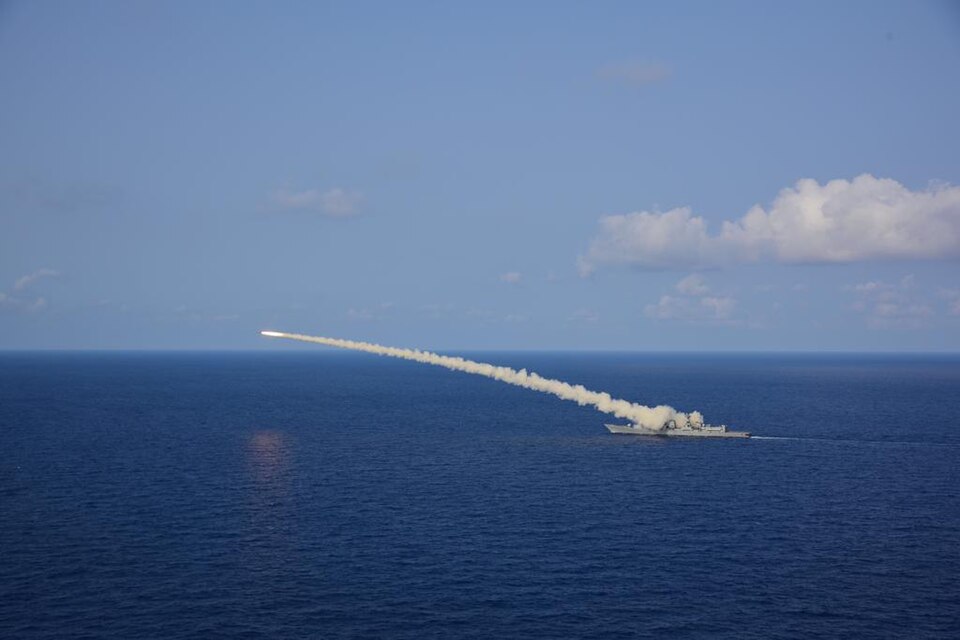
Overview
The BrahMos NG (Next Generation) missile is the latest evolution in the Indo-Russian BrahMos supersonic cruise missile family, designed to deliver enhanced strike capabilities with a focus on reduced size and increased versatility. Developed jointly by India’s Defence Research and Development Organisation (DRDO) and Russia’s NPO Mashinostroyenia, BrahMos NG aims to provide the Indian Armed Forces with a highly agile, compact, and lethal weapon system capable of deployment across a wider array of platforms — including lighter fighter aircraft, smaller naval vessels, and land-based launchers.
BrahMos NG represents a significant technological leap by combining the proven high-speed supersonic cruise missile technology of the BrahMos series with innovations in miniaturization, stealth, and guidance systems. Its compact design enables integration on platforms previously unable to carry the heavier BrahMos missile, thereby expanding operational flexibility. The missile maintains a supersonic speed of around Mach 3, ensuring rapid engagement and a reduced enemy reaction window. Additionally, its enhanced stealth features and advanced navigation systems boost survivability and precision, critical in modern multi-domain warfare.
This missile is a cornerstone of India’s strategic vision to maintain credible deterrence while modernizing its strike arsenal under the “Make in India” initiative. By fostering indigenous production capabilities and furthering bilateral defense collaboration with Russia, BrahMos NG significantly strengthens India’s ability to conduct precise, swift, and effective strikes against a variety of maritime and land targets, thereby enhancing national security and regional power projection.
Specifications
| Parameter | BrahMos NG |
|---|---|
| Type | Supersonic Cruise Missile (Next Gen) |
| Length | ~6 meters |
| Diameter | ~0.5 meters |
| Weight | ~1,500 kg |
| Speed | Mach 3 (approx. 3,700 km/h) |
| Range | 290–400 km (estimated, classified) |
| Warhead | Conventional high-explosive / Tungsten alloy penetrator |
| Warhead Weight | ~200–300 kg |
| Guidance System | INS + GPS/NavIC + active radar seeker |
| Launch Platforms | Fighter aircraft, naval vessels, land launchers |
| Propulsion | Two-stage propulsion: Solid rocket booster + Ramjet engine |
| Stealth Features | Reduced radar cross-section (RCS), low infrared signature |
| Accuracy (CEP) | <10 meters |
| Manufacturer | BrahMos Aerospace (India-Russia JV) |
| Service Entry | Expected 2025–2026 |
| Primary Users | Indian Army, Navy, Air Force |
Key Features
🚀 Compact and Versatile Design
- Smaller size and weight enable deployment from lighter platforms such as fighter jets (like Tejas and Su-30MKI), smaller warships, and mobile land launchers.
- Expands operational flexibility across multiple domains.
🎯 Supersonic Speed and Precision
- Travels at Mach 3, reducing enemy reaction time and increasing strike lethality.
- Advanced inertial navigation combined with GPS/NavIC and active radar seeker ensures high accuracy with a CEP under 10 meters.
🛡️ Enhanced Stealth and Survivability
- Designed with reduced radar cross-section and low infrared signature to evade detection and interception.
- Advanced electronic counter-countermeasures (ECCM) improve missile resilience in contested environments.
💪 Indigenous and Collaborative Development
- Developed under the Make in India initiative with significant Indian industrial participation.
- Builds on decades of Indo-Russian missile technology partnership, ensuring reliability and cutting-edge tech.
Variants
| Variant | Description |
|---|---|
| BrahMos NG Air-launched (BrahMos NG-A) | Compact version tailored for integration on fighter aircraft such as HAL Tejas and Su-30MKI. Enables precision strikes from the air. |
| BrahMos NG Ship-launched (BrahMos NG-S) | Designed for deployment on small to medium naval vessels, enhancing littoral and blue-water strike capabilities. |
| BrahMos NG Land-launched (BrahMos NG-L) | Mobile land-based launcher version for quick deployment and tactical strikes against ground targets. |
Operational Status
As of early 2026, BrahMos NG is in the advanced stages of testing with Indian Armed Forces and is expected to enter operational service by late 2026. Integration trials on the HAL Tejas Mk1A and naval corvettes are underway, with plans to induct the missile across all three services progressively. The Indian Navy’s interest in deploying BrahMos NG on newer stealth corvettes and frigates reflects the missile’s strategic role in maritime dominance. The Indian Army and Air Force are evaluating the missile for precision tactical strike roles, complementing existing BrahMos capabilities.
Development Timeline
| Date | Milestone |
|---|---|
| 2016 | Conceptualization and initial design studies initiated |
| 2018 | Formal joint Indo-Russian development agreement signed |
| 2020 | Prototype development and ground testing commenced |
| 2022 | First captive carry trials on HAL Tejas conducted |
| 2023 | Successful supersonic flight tests completed |
| 2024 | Integration trials on naval platforms and mobile launchers started |
| 2025 | Final validation trials; production readiness achieved |
| 2026 (Q4) | Expected induction into Indian Armed Forces |
Strategic Significance
BrahMos NG is a pivotal asset in India’s strategic arsenal, providing critical advantages in rapid precision strike and deterrence capabilities. Its compact design significantly broadens the spectrum of platforms capable of deploying supersonic cruise missiles, thereby enhancing force multipliers across air, sea, and land domains. This versatility is essential for responding to diverse threats in the Indian Ocean Region and beyond, ensuring India maintains a credible and flexible strike capability against emerging security challenges.
The missile’s supersonic speed and stealth features complicate interception by adversary air defenses, bolstering second-strike credibility and battlefield lethality. Moreover, BrahMos NG’s integration with indigenous platforms like HAL Tejas reinforces India’s self-reliance while strengthening strategic autonomy. As regional powers continue to expand their missile capabilities, BrahMos NG ensures India retains technological parity and operational superiority in missile warfare.
Future Upgrades
- Extended Range Versions: Research is underway to push the missile’s range beyond 500 km, potentially leveraging next-gen propulsion tech.
- Hypersonic Variant: Feasibility studies on adapting BrahMos NG into a hypersonic cruise missile are in early phases, aiming for speeds above Mach 5.
- Network-Centric Warfare Integration: Enhanced connectivity with battlefield management systems for real-time target updates and swarm attack capabilities.
- Multi-Role Warheads: Development of specialized warheads including anti-ship, bunker-buster, and electronic warfare payloads.
Comparison Table
| Feature | BrahMos NG | BrahMos (Base Model) | Nirbhay (Indian Subsonic Cruise Missile) |
|---|---|---|---|
| Length | ~6 meters | 8.4 meters | 6 meters |
| Weight | ~1,500 kg | ~3,000 kg | ~1,500 kg |
| Speed | Mach 3 | Mach 2.8 | Subsonic (~0.7 Mach) |
| Range | 290–400 km (estimated) | 290 km | 1,000 km |
| Guidance | INS + GPS/NavIC + radar | INS + GPS + radar | INS + GPS + TERCOM |
| Launch Platforms | Air, Sea, Land | Air, Sea, Land | Land |
| Stealth Features | Enhanced RCS reduction | Moderate | Low |
| Warhead Weight | 200–300 kg | 200–300 kg | 200 kg |
Key Takeaways
- ✅ Compact supersonic cruise missile enabling deployment on lighter and diverse platforms
- 🎯 Mach 3 speed ensures rapid target engagement and reduced interception chances
- 💪 Advanced stealth technology reduces radar and infrared signatures for increased survivability
- 🇮🇳 Indigenous development with Russian collaboration strengthens India’s defense manufacturing ecosystem
- 🚀 Multi-platform versatility expands tactical and strategic options across air, sea, and land forces
- 📈 Future-proof design allows for upgrades including hypersonic speeds and extended ranges
Last Updated: March 2026
Status: In advanced testing phase, expected operational induction Q4 2026
Deployed with: Indian Army, Indian Navy, Indian Air Force (planned)
Sources & References:
- Defence Research and Development Organisation (DRDO) Official Releases
- BrahMos Aerospace Press Statements
- Jane’s Defence Weekly, 2024-2026 Editions
- Ministry of Defence, Government of India Reports
- The Diplomat, “BrahMos NG: India’s Next-Gen Missile” (2025)
- Flight Global Defense Analysis (2023)