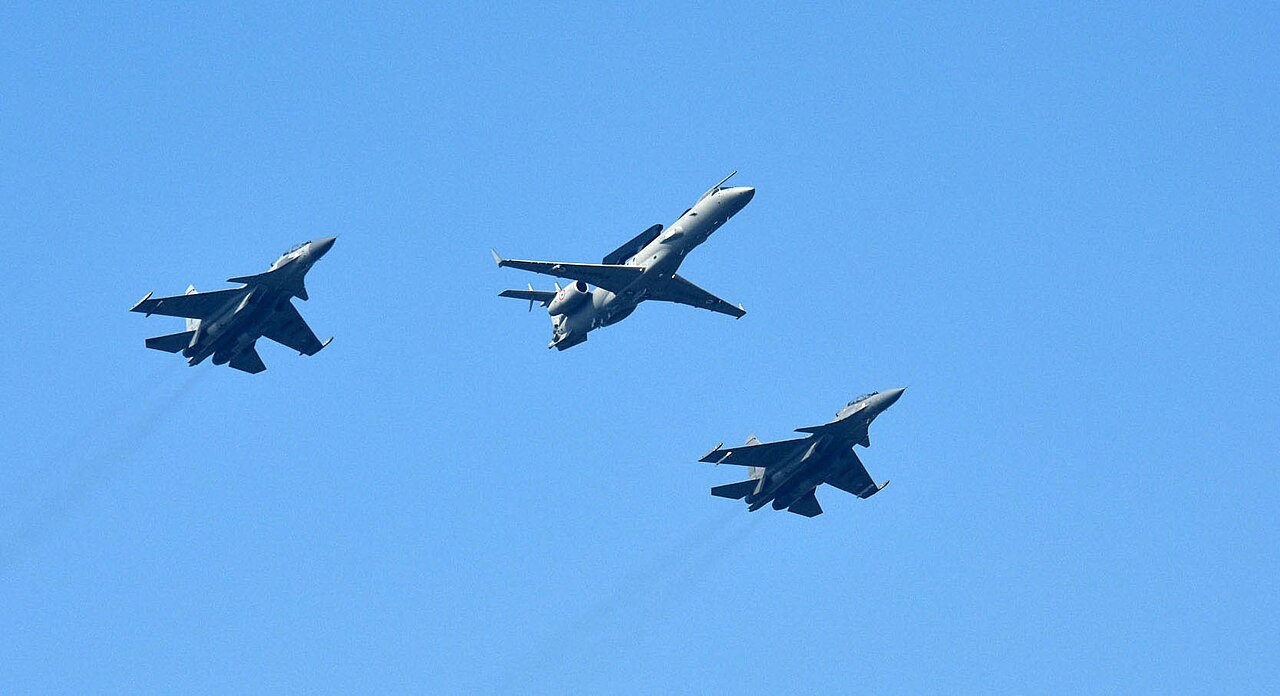
Overview
The DRDO NETRA (meaning “Eye” in Sanskrit) is an indigenous Unmanned Aerial Vehicle (UAV) developed by India’s Defence Research and Development Organisation (DRDO) primarily for electronic warfare and surveillance applications. Designed as a lightweight quadcopter, NETRA provides tactical commanders with enhanced real-time situational awareness by delivering high-resolution video and sensor data from complex urban and rugged terrains. Its compact size and advanced avionics allow it to operate effectively in counter-insurgency, border security, and battlefield reconnaissance roles, making it an indispensable asset for the Indian Armed Forces and paramilitary forces.
Developed with a focus on portability, ease of deployment, and operational flexibility, NETRA fills a critical gap in India’s electronic warfare and surveillance capabilities by leveraging indigenous technology under the Make in India initiative. The system integrates advanced electro-optical cameras with day/night vision capabilities, enabling 24/7 intelligence gathering. Data and live video feeds are transmitted securely to ground control stations, allowing commanders to make informed decisions rapidly. Its robust design ensures stability and endurance in harsh environmental conditions, enhancing the effectiveness of tactical operations.
NETRA’s development showcases India’s growing expertise in UAV technology and electronic warfare systems, emphasizing self-reliance and strategic autonomy. The platform’s modular architecture allows for future upgrades, including integration with more sophisticated sensors and electronic countermeasure payloads, ensuring it remains relevant against evolving threats.
Specifications
| Parameter | Specification |
|---|---|
| Platform Type | Quadcopter UAV |
| Weight | Approx. 2.5 kg |
| Dimensions | Rotor diameter: ~0.6 m; Compact foldable design |
| Payload Capacity | ~1.5 kg |
| Maximum Flight Time | 30–45 minutes (depending on payload) |
| Operating Altitude | Up to 500 meters AGL (Above Ground Level) |
| Range (Control & Data Link) | Up to 2 km (line-of-sight) |
| Navigation System | GPS/INS integrated |
| Camera Systems | High-resolution daylight camera, thermal imaging & infrared sensors for night vision |
| Video Transmission | Real-time digital video link to ground control station |
| Control Method | Remote piloting via ground control station with autonomous flight modes |
| Environmental Operating Conditions | Temperature: -10°C to +50°C; Wind speed tolerance: up to 10 m/s |
| Launch and Recovery | Vertical takeoff and landing (VTOL) |
| Materials | Lightweight composite materials (carbon fiber reinforced plastic) |
| Electronic Warfare Capability | Surveillance and reconnaissance; potential for electronic signal detection (future upgrades) |
Key Features
🚀 Lightweight and Portable Design
- Compact quadcopter design enables quick deployment in confined urban and rugged terrain environments
- Foldable arms and lightweight composite materials facilitate ease of transport by infantry and special forces
🎯 Advanced Sensor Suite
- Equipped with high-resolution daylight cameras and infrared sensors for effective day/night surveillance
- Real-time video streaming to command centers enhances tactical decision-making and battlefield awareness
🛡️ Indigenous and Secure Technology
- Fully designed and developed by DRDO under the Make in India program
- Secure encrypted data transmission ensures operational security in hostile environments
💪 Versatile Operational Capability
- Suitable for counter-insurgency, border surveillance, urban warfare, and electronic warfare support roles
- Capable of operating in diverse climatic and terrain conditions with minimal logistical support
Variants
| Variant Name | Description |
|---|---|
| NETRA Mark I | Initial prototype with basic day/night imaging and real-time video transmission capabilities. |
| NETRA Mark II | Enhanced endurance and sensor package including thermal imaging and extended range data link. |
| NETRA EW Variant | Under development for electronic signal detection and jamming capabilities to support electronic warfare operations. |
Operational Status
The DRDO NETRA UAV has been inducted into service with various Indian security agencies including the Indian Army, CRPF, and other paramilitary forces. It has been actively deployed in counter-insurgency operations in Jammu & Kashmir, the Northeast, and along sensitive border areas to provide real-time battlefield intelligence and enhance situational awareness. Its rugged design and easy-to-operate controls have made it a preferred choice for tactical surveillance in challenging terrains.
NETRA has also been showcased in various national defense exhibitions and has attracted interest for wider adoption across other branches of the Indian Armed Forces. Continuous feedback from field deployments is guiding incremental updates to improve endurance, sensor capabilities, and electronic warfare integration.
Development Timeline
| Date | Milestone |
|---|---|
| 2012 | Conceptualization and initial design phase |
| 2014 | First prototype flight tests |
| 2015 | Integration of high-resolution cameras and day/night sensors |
| 2016 | Initial operational trials with Indian Army and paramilitary |
| 2018 | Introduction of improved communication and control systems |
| 2020 | Deployment in counter-insurgency operations |
| 2023 | Development of EW variant and enhanced sensor payloads underway |
| 2025 | Plans for integration with network-centric warfare systems |
Strategic Significance
The DRDO NETRA UAV significantly enhances India’s indigenous electronic warfare and surveillance capabilities, reducing dependence on foreign platforms. Its ability to provide real-time intelligence in complex terrains directly benefits counter-insurgency and border security operations, which are critical for national security given India’s diverse threat environment. The platform’s indigenous development embodies the Make in India vision, promoting self-reliance in defense technology.
By enabling tactical commanders to monitor hostile activity and terrain changes closely, NETRA improves operational responsiveness and reduces risks to personnel. Its modular design paves the way for future integration with sophisticated EW payloads, electronic countermeasures, and networked battlefield management systems, thus contributing to India’s evolving doctrine of integrated electronic and cyber warfare.
Future Upgrades
- Extended Flight Endurance: Research ongoing to enhance battery technology and power management for longer missions beyond 45 minutes
- Enhanced Sensor Suite: Integration of multispectral imaging, synthetic aperture radar (SAR), and electronic intelligence (ELINT) sensors planned
- Electronic Warfare Payloads: Development of compact jamming and signal interception modules to counter hostile UAVs and electronic threats
- Swarm Capabilities: Exploring coordinated operations of multiple NETRA UAVs for area surveillance and network-centric warfare
- AI-enabled Autonomous Flight: Incorporating AI and machine learning for autonomous navigation, target recognition, and threat assessment
Comparison Table
| Feature | DRDO NETRA | Foreign Equivalent: RQ-11 Raven (USA) | Foreign Equivalent: DJI Mavic 2 Enterprise (Commercial) |
|---|---|---|---|
| Platform Type | Quadcopter UAV | Quadcopter UAV | Quadcopter UAV |
| Weight | ~2.5 kg | 1.9 kg | 0.9 kg |
| Flight Time | 30–45 minutes | 60 minutes | ~31 minutes |
| Operational Range | Up to 2 km | Up to 10 km | 5 km |
| Sensor Suite | Day/night, IR, thermal (Mark II) | Daylight and IR | Daylight and thermal |
| Indigenous Technology | Yes (Make in India) | No | No |
| Electronic Warfare Capabilities | Under development | Limited | None |
| Portability | Foldable and rugged | Portable but less rugged | Highly portable |
Key Takeaways
- ✅ Indigenous quadcopter UAV providing vital real-time ISR capabilities
- 🎯 Designed for tactical surveillance in urban and rugged terrains with day/night vision
- 💪 Lightweight, portable, and robust platform supporting counter-insurgency and border security
- 🔒 Secure encrypted data link ensures safe transmission of critical intelligence
- 🚀 Modular design supports future upgrades including electronic warfare payloads and AI-enabled autonomy
- 🇮🇳 Embodies Make in India ethos, enhancing self-reliance in defense technology
- 🎯 Operational with Indian Army and paramilitary units since 2016, actively deployed in conflict zones
Last Updated: February 2026
Status: Active Deployment
Operators: Indian Army, CRPF, Paramilitary Forces
Sources and References:
- DRDO official publications and press releases
- Indian Ministry of Defence reports
- Jane’s Unmanned Aerial Vehicles and Targets 2023-24
- Defense News India, “DRDO NETRA UAV Operational Deployment,” 2022
- Make in India Defense Sector updates