Overview
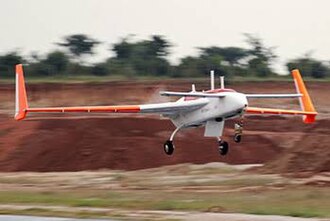
The DRDO Rustom-2 is an indigenously designed and developed Medium Altitude Long Endurance (MALE) Unmanned Aerial Vehicle (UAV) by India’s Defence Research and Development Organisation (DRDO). Conceptualized to bolster India’s aerial surveillance, reconnaissance, and electronic warfare capabilities, the Rustom-2 represents a significant leap in the country’s UAV technology, emphasizing self-reliance and reducing dependence on foreign platforms. This UAV system is tailored to operate at medium altitudes with extended flight endurance, enabling it to conduct persistent intelligence, surveillance, and reconnaissance (ISR) missions over strategic areas of interest.
With a service ceiling of up to 30,000 feet and flight endurance surpassing 24 hours, the Rustom-2 is engineered to carry multiple payloads including electro-optical (EO), infrared (IR) sensors, synthetic aperture radar (SAR), and electronic intelligence (ELINT) equipment. This flexibility allows it to perform a wide range of missions in both military and civilian domains, including border surveillance, battlefield reconnaissance, disaster management, and maritime patrol. The platform’s indigenous design aligns with the Indian government’s ‘Make in India’ initiative, enhancing the domestic UAV ecosystem and providing the Indian Armed Forces with a reliable and cost-effective alternative to imported systems.
Specifications
| Parameter | Specification |
|---|---|
| Type | Medium Altitude Long Endurance (MALE) UAV |
| Manufacturer | Defence Research and Development Organisation (DRDO) |
| Crew | Unmanned |
| Length | Approx. 9 meters |
| Wingspan | Approx. 20 meters |
| Maximum Takeoff Weight (MTOW) | ~1,500 kg |
| Payload Capacity | ~350 kg (multi-sensor payloads) |
| Powerplant | Twin-engine turboprop (indigenous engine under development) |
| Maximum Flight Endurance | >24 hours |
| Operational Altitude | Up to 30,000 feet (9,144 meters) |
| Cruising Speed | 180–220 km/h |
| Maximum Speed | 250 km/h (approximate) |
| Range | 250–300 km (line-of-sight), extended via ground station network |
| Navigation System | GPS/INS with autonomous flight capabilities |
| Communication | Line-of-sight datalink, satellite communication (planned) |
| Sensors / Payloads | Electro-optical (EO), Infrared (IR), Synthetic Aperture Radar (SAR), Signals Intelligence (SIGINT/ELINT), Electronic Warfare (EW) equipment |
| Launch and Recovery | Conventional runway takeoff and landing |
| Operational Environment | Day/Night all-weather operations |
Key Features
- 🚀 Long Endurance Flights: Capable of continuous sorties exceeding 24 hours, enabling persistent surveillance over strategic locations.
- 🎯 Multi-Sensor Payload Integration: Supports diverse payloads including EO/IR sensors, SAR, and electronic intelligence equipment, facilitating comprehensive ISR capabilities.
- 🛡️ High Altitude Operations: Operates effectively at altitudes up to 30,000 feet, providing a broad surveillance footprint and reduced vulnerability.
- 🇮🇳 Indigenous Development: Entirely designed and developed by DRDO, supporting India’s ‘Make in India’ vision and reducing reliance on foreign UAV platforms.
- 🔄 Versatile Mission Profile: Deployable in military operations, border security, disaster management, and civilian surveillance applications.
- 💻 Advanced Autonomy: Features autonomous navigation with GPS/INS systems, enabling precise waypoint navigation and mission adaptability.
- 📡 Secure Communication: Equipped with encrypted line-of-sight datalinks, with plans for satellite communication to extend operational range.
Variants
| Variant | Description |
|---|---|
| Rustom-H | Tactical UAV variant with shorter endurance (~12 hours) and smaller payload capacity, designed for tactical battlefield surveillance. |
| Rustom-2 | MALE UAV variant with extended endurance (>24 hours), higher payload capacity, and advanced ISR capabilities. |
| Rustom-C | Proposed combat variant under conceptual development, potentially capable of strike missions with precision-guided munitions. |
Operational Status
As of early 2026, the DRDO Rustom-2 is in advanced stages of flight testing and validation. Multiple flight trials have demonstrated its endurance, payload integration, and autonomous operational capabilities. The Indian Armed Forces have expressed strong interest, and limited induction into operational units is expected within the next 1-2 years following the completion of certification and operational evaluation. The system is poised to complement existing UAV fleets such as the Israeli-origin Heron and Searcher UAVs, providing a fully indigenous alternative tailored to India’s strategic needs.
Development Timeline
| Year | Milestone |
|---|---|
| 2009 | Project initiation under DRDO’s UAV development programme |
| 2012 | Maiden flight of Rustom-H prototype |
| 2016 | Development focus shifted towards Rustom-2 with longer endurance and advanced payloads |
| 2020 | First flight of Rustom-2 prototype with integrated avionics and payloads |
| 2022-2024 | Series of endurance and sensor integration trials conducted |
| 2025 | Successful high-altitude flights and extended endurance demonstrated |
| 2026 (planned) | Commencement of limited user trials and operational evaluation with Indian Armed Forces |
Strategic Significance
The DRDO Rustom-2 UAV is a cornerstone in India’s quest for technological self-sufficiency in unmanned aerial systems. With persistent surveillance capabilities at medium altitude, Rustom-2 significantly enhances the situational awareness of Indian defense forces, particularly along sensitive borders and maritime frontiers. Its indigenous development reduces the country’s dependence on foreign UAV imports, mitigating supply chain vulnerabilities and enabling tailored upgrades based on operational feedback.
Moreover, the Rustom-2 strengthens India’s UAV ecosystem by fostering domestic manufacturing, research, and development. This contributes to national security, promotes high-technology employment, and aligns with broader government objectives such as ‘Make in India’ and Atmanirbhar Bharat. The platform’s versatility in both military and civilian roles ensures expansive utility, from counter-insurgency operations to disaster management and infrastructure monitoring.
Future Upgrades
- Satellite Communication (SATCOM): Integration of SATCOM links to extend beyond line-of-sight operational range.
- Combat Variant (Rustom-C): Development of an armed version capable of precision strike, equipped with air-to-ground munitions.
- Advanced Sensor Suites: Incorporation of synthetic aperture radar (SAR) with ground moving target indication (GMTI), improved electronic warfare (EW) payloads, and multi-spectral imaging.
- Improved Powerplant: Indigenous turboprop engine enhancements for increased fuel efficiency and payload capacity.
- Swarm Coordination: Potential development of cooperative swarm UAV operations for network-centric warfare.
Comparison Table
| Feature | DRDO Rustom-2 | IAI Heron (Israel) | MQ-9 Reaper (USA) |
|---|---|---|---|
| Endurance | >24 hours | ~40 hours | ~27 hours |
| Service Ceiling | 30,000 ft (9,144 m) | 30,000 ft (9,144 m) | 50,000 ft (15,240 m) |
| Payload Capacity | ~350 kg | ~250-300 kg | 1,700 kg |
| Indigenous Development | Yes (India) | No | No |
| Primary Role | ISR, EW, Surveillance | ISR | ISR, Strike |
| Powerplant | Twin turboprop (indigenous) | Piston engine | Turboprop engine |
| Operational Status | Testing / Limited Induction | Operational | Operational |
| Cost | Lower (estimated) | Moderate | High |
Key Takeaways
- ✅ Indigenous MALE UAV designed and developed by DRDO to reduce India’s dependence on foreign UAVs.
- 🎯 Over 24 hours endurance at altitudes up to 30,000 feet for persistent ISR and electronic warfare missions.
- 💪 Multi-payload capability including EO/IR, SAR, and ELINT sensors enhancing situational awareness.
- 🇮🇳 Supports Make in India initiative, promoting technological self-reliance and domestic manufacturing.
- 🔄 Versatile platform deployable in military, border security, and civilian surveillance applications.
- 🚀 Future-ready with planned upgrades including SATCOM and combat capabilities.
Last updated: March 2026 | Status: Advanced Flight Testing / Limited Induction | Deployment: Indian Armed Forces (Planned)
Sources:
- DRDO official releases and press statements
- Jane’s Defence Weekly (2023-2026)
- Indian Ministry of Defence reports
- Defense News and UAV industry analyses