Overview
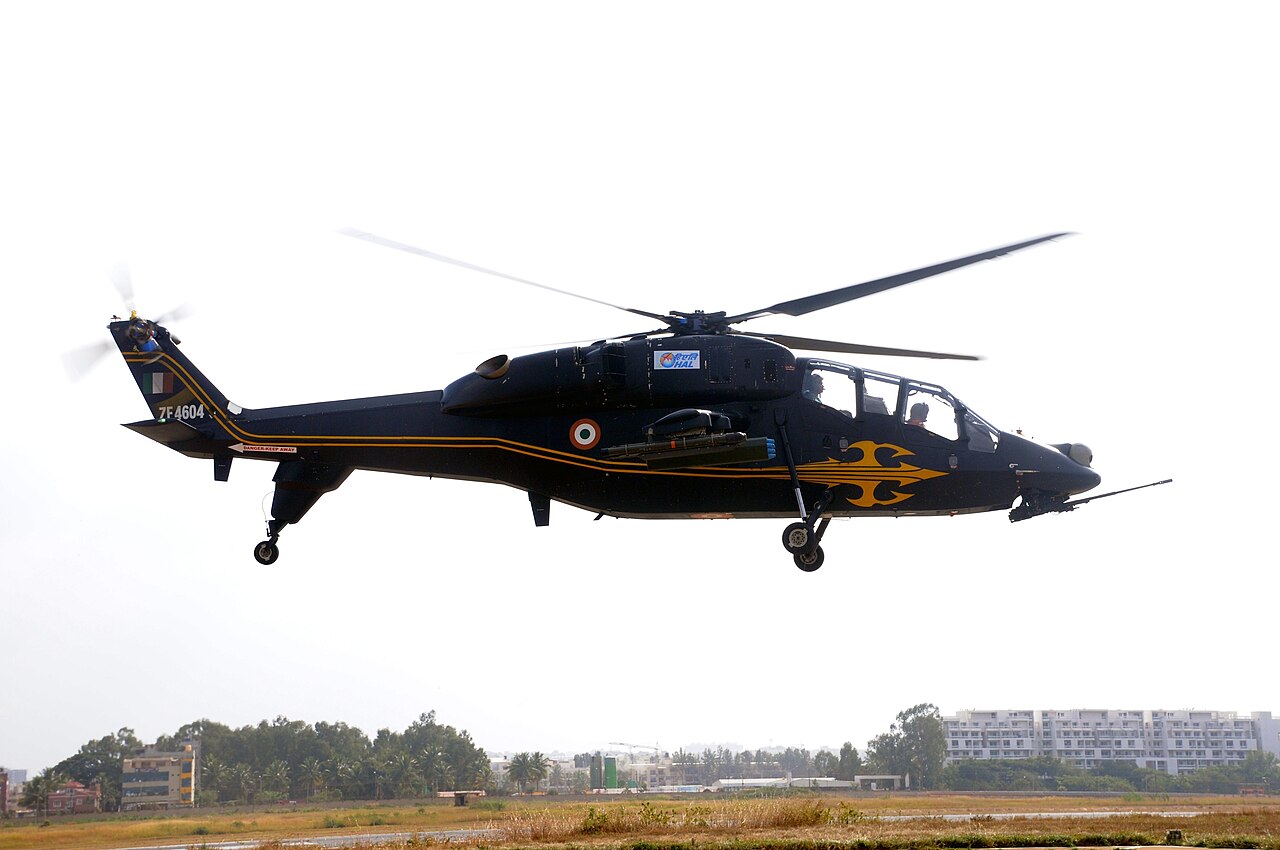
The HAL Light Combat Helicopter (LCH) is a state-of-the-art attack helicopter developed indigenously by Hindustan Aeronautics Limited (HAL) to meet the operational requirements of the Indian Army and Indian Air Force. Designed primarily for high-altitude warfare, the LCH is capable of operating effectively in the challenging mountainous terrain of the Himalayas, where thin air and extreme weather conditions pose significant challenges to rotary-wing aircraft. With a maximum operational altitude of around 6,000 meters (approximately 20,000 feet), the LCH is uniquely positioned to provide close air support, armed reconnaissance, and counter-insurgency operations in regions where other helicopters face performance limitations.
The LCH incorporates cutting-edge avionics, weapon systems, and stealth features that reduce its radar and infrared signatures, enhancing survivability in hostile environments. Its versatile armament suite includes precision-guided munitions for both air-to-air and air-to-ground missions, enabling it to engage a diverse range of targets including tanks, bunkers, and enemy aircraft. The helicopter’s modular design and advanced flight control system allow for excellent maneuverability and mission flexibility, making it an indispensable asset for modern Indian defense operations.
As a flagship program under India’s “Make in India” initiative, the HAL LCH represents a significant milestone in indigenous aerospace development. Its successful induction into the Indian Armed Forces strengthens self-reliance and ensures strategic autonomy in the critical domain of attack helicopter capabilities. The LCH’s deployment along India’s northern and northeastern borders enhances the country’s ability to counter threats in high-altitude conflict zones while maintaining technological parity with regional adversaries.
Specifications
| Parameter | Description |
|---|---|
| Manufacturer | Hindustan Aeronautics Limited (HAL) |
| Type | Light Attack Helicopter |
| Crew | 2 (Pilot and Co-pilot/Gunner) |
| Length | 14.3 meters |
| Height | 4.0 meters |
| Rotor Diameter | 13.2 meters (main rotor) |
| Maximum Takeoff Weight | 5,800 kg |
| Empty Weight | ~2,500 kg |
| Powerplant | 2 × HAL/Turbomeca Shakti turboshaft engines |
| Engine Power | 2 × 750 kW (approx 1,000 shp) each |
| Maximum Speed | 280 km/h (approx. 150 knots) |
| Cruising Speed | 260 km/h |
| Range | 450 km (combat radius approx. 300 km) |
| Service Ceiling | 6,000 meters (20,000 feet) |
| Rate of Climb | 8 m/s |
| Armament | - 20 mm turret gun (Nexter M621 cannon) |
| - Air-to-air missiles (Mistral, or indigenous alternatives) | |
| - Air-to-ground missiles (Helina anti-tank guided missile, rockets) | |
| - Rocket pods (70 mm rockets) | |
| - Precision-guided bombs and rockets | |
| Avionics | Integrated glass cockpit, Helmet Mounted Display (HMD), radar warning receiver, missile approach warning system, IR jammer |
| Stealth Features | Reduced radar cross-section, IR signature suppression, composite materials |
| Navigation Systems | GPS/INS, Terrain Following Radar (TFR), Night Vision Systems (NVS) |
| Operational Altitude | Optimized to operate efficiently up to 6,000 meters |
Key Features
🚀 High-Altitude Performance
- Engineered to perform optimally at extreme altitudes up to 6,000 meters, addressing the unique challenges of Himalayan terrain.
- Powerful Shakti engines enable sustained hover and maneuverability at thin air densities.
🎯 Precision Weaponry
- Equipped with an integrated Nexter M621 20mm cannon turret for close support and suppression.
- Supports a range of precision-guided munitions, including the indigenous Helina (Helicopter-launched Nag) anti-tank guided missile.
- Capability to carry Mistral air-to-air missiles for self-defense and aerial combat.
🛡️ Advanced Survivability and Stealth
- Designed with composite materials and IR suppression to reduce detectability by enemy radars and heat-seeking missiles.
- Equipped with countermeasure systems including chaff, flares, missile approach warning systems, and radar warning receivers.
- Crashworthy seats and armored cockpit to enhance crew survivability.
💻 Integrated Avionics Suite
- Glass cockpit with multifunction displays and helmet-mounted sights for enhanced situational awareness.
- Integrated navigation and targeting systems for all-weather, day/night operations.
- Digital flight control system enabling superior handling and mission flexibility.
Variants
| Variant | Description |
|---|---|
| LCH Mk I | Initial production model with baseline avionics and weapon systems. |
| LCH Mk II | Planned upgraded variant with improvements in engine power, avionics, and payload capacity. |
| Export Variant | Customized versions tailored for international customers with specific mission requirements. |
Operational Status
- The HAL Light Combat Helicopter was officially inducted into the Indian Air Force in March 2020, marking a significant milestone for indigenous military aviation.
- The Indian Army is in the process of integrating the LCH into its aviation wing to enhance its high-altitude operational capabilities.
- The LCH has undergone extensive trials and successfully demonstrated combat readiness in high-altitude exercises, including deployments along the Line of Actual Control (LAC) in Ladakh.
- Production is ongoing at HAL’s Bengaluru facility, with plans for phased induction of up to 65 units for the Indian Armed Forces.
Development Timeline
| Year | Milestone |
|---|---|
| 2006 | Conceptual design initiated by HAL under the Light Combat Helicopter program. |
| 2010 | First prototype rolled out and began ground tests. |
| 2013 | First flight of the LCH prototype. |
| 2015 | Completion of initial flight test phase; integration of weapons systems. |
| 2018 | Final qualification trials completed. |
| 2020 | Official induction into Indian Air Force. |
| 2022 | Commencement of limited series production and army trials. |
| 2024 | Delivery of LCH to Indian Army commenced; further upgrades planned. |
Strategic Significance
The HAL Light Combat Helicopter fills a critical capability gap for the Indian Armed Forces by providing an indigenous, high-performance attack helicopter optimized for the unique challenges of mountainous warfare. Prior to the LCH, India relied heavily on foreign platforms that lacked the necessary high-altitude performance. The LCH’s ability to operate at elevations above 6,000 meters enables the Indian military to maintain air superiority and provide close air support in the strategically sensitive Himalayan border regions with China and Pakistan.
This indigenous platform enhances India’s defense self-reliance and reduces dependency on foreign suppliers, aligning with the government’s “Make in India” initiative. The LCH’s modular design and advanced avionics also offer export potential, promoting India as a technology provider in the global defense market. Its multi-role capability supports a wide range of missions including anti-tank warfare, counter-insurgency, reconnaissance, and air defense, significantly boosting India’s tactical and strategic options.
Future Upgrades
- LCH Mk II: Planned upgrade with more powerful Shakti engines for improved payload and altitude performance.
- Enhanced Avionics: Integration of state-of-the-art AESA radar, improved electronic warfare suites, and enhanced network-centric warfare capabilities.
- Weapon Systems: Introduction of indigenous air-to-air missiles and longer-range precision-guided munitions.
- Unmanned Option: Feasibility studies underway for optionally piloted or unmanned versions for high-risk missions.
- Improved Survivability: Advanced stealth coatings and active protection systems to counter emerging threats.
Comparison Table
| Feature | HAL LCH | HAL Dhruv (ALH) | AH-64 Apache (US) |
|---|---|---|---|
| Role | Attack Helicopter | Utility/Transport Helicopter | Attack Helicopter |
| Maximum Altitude | 6,000 meters | 4,500 meters | 6,400 meters |
| Maximum Speed | 280 km/h | 260 km/h | 365 km/h |
| Armament | 20 mm cannon, missiles, rockets | Light guns, limited armament | 30 mm cannon, Hellfire missiles, rockets |
| Indigenous Content | >70% | >70% | N/A |
| Stealth Features | Yes | No | Limited |
| Crew | 2 | 2-3 | 2 |
| Combat Radius | ~300 km | ~250 km | ~480 km |
| Primary Use | High-altitude attack & support | Transport & utility | Heavy attack |
Key Takeaways
- ✅ Indigenous Design: Fully developed by HAL with over 70% indigenous content, promoting self-reliance.
- 🎯 High-Altitude Optimization: Superior performance in thin air environments up to 6,000 meters.
- 💪 Multi-Role Combat: Capable of air-to-air and air-to-ground missions with precision weaponry.
- 🛡️ Advanced Survivability: Incorporates stealth features and modern countermeasures.
- 🚀 Strategic Asset: Enhances India’s operational capabilities along sensitive border regions.
- 🌐 Export Potential: Positioned as a competitive platform for global defense markets.
Last updated: February 27, 2026
Status: Active service with Indian Air Force and Indian Army (induction ongoing)
Deployment: Himalayan border regions, internal security operations, and combat support roles
References
- Hindustan Aeronautics Limited official releases
- Indian Ministry of Defence publications
- Jane’s Defence Weekly
- FlightGlobal Helicopter Market Reports
- Press Information Bureau, Government of India
- Defense News and official Indian Armed Forces statements