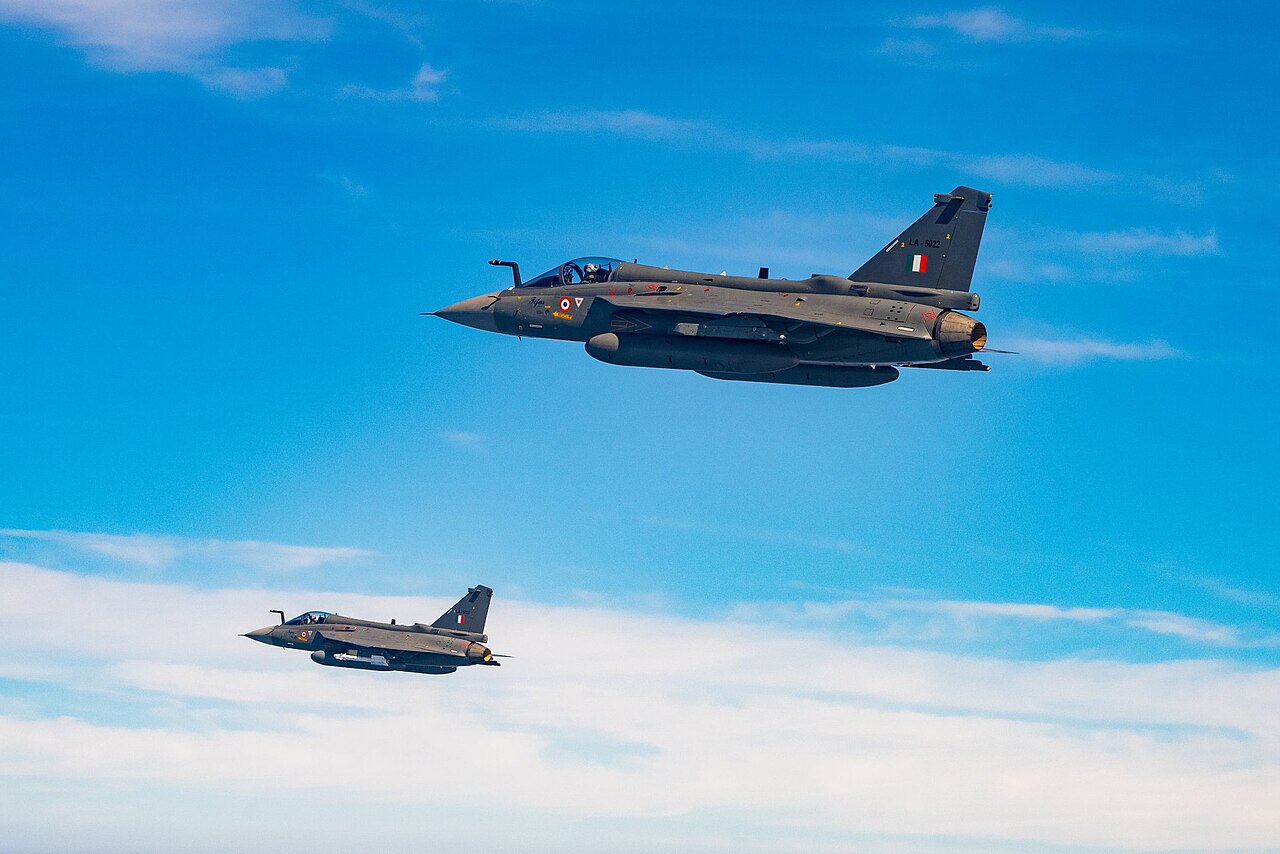
Overview
The HAL Tejas Mk2 represents a significant evolution in India’s indigenous fighter aircraft development, building upon the foundation laid by the Tejas Mk1. Developed by Hindustan Aeronautics Limited (HAL) in collaboration with the Aeronautical Development Agency (ADA), the Tejas Mk2 is designed as a medium weight, multirole fighter aircraft aimed at replacing the aging MiG-21 and MiG-27 fleets of the Indian Air Force (IAF). This aircraft incorporates numerous advancements in aerodynamics, avionics, weapon systems, and propulsion to meet 21st-century combat requirements.
Featuring a larger airframe, increased maximum takeoff weight (MTOW), and a more powerful engine, the Tejas Mk2 is capable of enhanced payload carriage, extended range, and improved survivability. Its sophisticated avionics suite, including an Active Electronically Scanned Array (AESA) radar, digital fly-by-wire controls, and integrated electronic warfare systems, gives it superior situational awareness and combat effectiveness. The aircraft supports a wider spectrum of weapons, including beyond visual range (BVR) missiles, precision-guided munitions, and air-to-ground strike packages, making it a true multirole platform.
As a cornerstone of India’s Make in India initiative, the Tejas Mk2 reinforces the country’s strategic autonomy in defense technology. It is expected to form the backbone of the IAF’s frontline fighter fleet, ensuring long-term operational sustainability and reducing dependency on foreign suppliers. The successful induction of the Tejas Mk2 will mark a milestone in India’s aerospace capabilities and boost the indigenous defense manufacturing ecosystem.
Specifications Table
| Parameter | Specification |
|---|---|
| Role | Medium Weight Multirole Fighter |
| Manufacturer | Hindustan Aeronautics Limited (HAL) |
| First Flight | Expected 2023 (Prototype) |
| Length | ~13.5 meters |
| Wingspan | ~8.2 meters |
| Height | ~4.4 meters |
| Maximum Takeoff Weight (MTOW) | ~17,500 kg |
| Empty Weight | ~7,000 kg |
| Powerplant | 1 × General Electric F414 INS6 afterburning turbofan engine |
| Maximum Thrust | 98 kN (22,000 lbf) with afterburner |
| Maximum Speed | Mach 1.8+ |
| Service Ceiling | 16,500 meters (54,000 ft) |
| Combat Radius | ~500-600 km (typical mission) |
| Ferry Range | ~3,200 km (with drop tanks) |
| Avionics | AESA Radar (EL/M-2052 or indigenous), Digital Fly-By-Wire, Helmet Mounted Display System (HMDS), EW suite |
| Armament Hardpoints | 8 (including 2 under-wing pylons and 2 under-fuselage) |
| Weapons Capability | Air-to-Air Missiles (Astra, R-77), Air-to-Ground Missiles, Precision-guided bombs, Rocket Pods, Gun: 1× 23mm GSh-23 cannon |
| Crew | 1 (single-seat) |
| Radar Cross Section (RCS) | Reduced compared to MiG-21; exact classified |
Key Features
🚀 Enhanced Performance and Payload
- Increased MTOW (~17.5 tons) allows carriage of heavier and more diverse weapons and fuel.
- Powered by the General Electric F414 INS6 engine delivering 98 kN thrust, providing higher thrust-to-weight ratio and supercruise capability.
- Aerodynamically optimized airframe for better range and maneuverability.
🎯 Advanced Avionics and Sensors
- Equipped with an AESA radar providing superior target detection, tracking, and engagement capabilities.
- Integrated electronic warfare suite and radar warning receivers for enhanced survivability.
- Digital fly-by-wire flight control system for improved handling and safety.
- Helmet Mounted Display System (HMDS) allowing off-boresight targeting.
🛡️ Indigenous Design and Multirole Capability
- Designed to perform air superiority, ground attack, close air support, and reconnaissance missions.
- Capable of deploying a wide range of weapons, including indigenous Astra BVR missiles and guided bombs.
- Significant Make in India content, supporting domestic aerospace industry growth.
- Modern cockpit with glass displays and sensor fusion for pilot situational awareness.
Variants
| Variant | Description |
|---|---|
| Tejas Mk2 (Standard) | Baseline medium weight fighter with enhanced payload and avionics over Mk1. |
| Tejas Mk2 Trainer | Two-seat trainer variant planned for pilot conversion and training. |
| Naval Tejas Mk2 | Proposed carrier-capable version for Indian Navy (under conceptual development). |
Operational Status
As of early 2026, the Tejas Mk2 is in the advanced stages of prototype testing with flight trials underway. The IAF has placed initial orders for approximately 83 aircraft, targeting phased induction starting from 2027-28. The aircraft is slated to progressively replace the MiG-21 Bison and MiG-27 strike aircraft, which are being retired due to age and obsolescence.
The program has garnered strong support from the Indian government and defense establishment as a vital step toward reducing import dependence and modernizing the IAF fleet. HAL is ramping up production capabilities to meet the anticipated demand, with infrastructure being upgraded to support serial manufacturing.
Development Timeline
| Date | Milestone |
|---|---|
| 2003 | Conceptual studies for Tejas Mk2 initiated |
| 2015 | Finalization of design and selection of F414 INS6 engine |
| 2017 | Prototype airframe construction started |
| August 2023 | First flight of Tejas Mk2 prototype |
| 2024-2025 | Extensive flight testing and weapon integration |
| 2026 | Initial Operational Clearance (IOC) targeted |
| 2027-2028 | Start of production and induction into the IAF |
Strategic Significance
The HAL Tejas Mk2 is a linchpin in India’s strategic goal of achieving self-reliance in defense aerospace through the Make in India initiative. Its induction will phase out legacy Soviet-era platforms, thereby enhancing the IAF’s operational capabilities with a modern, versatile, and domestically produced fighter. This reduces India’s dependence on foreign suppliers for critical combat aircraft and associated technologies.
The aircraft’s multirole capability enables the IAF to maintain air superiority while executing precision strike missions, crucial for addressing diverse security challenges on India’s borders. Moreover, the indigenous development fosters technological innovation, skills development, and strengthens India’s position in the global defense market as a producer of advanced fighter jets.
Future Upgrades
- Integration of an indigenous AESA radar developed by DRDO to replace imported radar systems.
- Development of a thrust-vectoring engine variant for enhanced maneuverability.
- Implementation of advanced electronic warfare and self-protection systems.
- Incorporation of network-centric warfare capabilities for seamless integration with other Indian armed forces platforms.
- Progress on naval variant for Indian Navy’s aircraft carrier operations.
Comparison Table
| Feature | Tejas Mk1 | Tejas Mk2 | MiG-21 Bison |
|---|---|---|---|
| Maximum Takeoff Weight | ~13,500 kg | ~17,500 kg | ~9,800 kg |
| Engine | GE F404 IN20 | GE F414 INS6 | Tumansky R-25 |
| Maximum Speed | Mach 1.6 | Mach 1.8+ | Mach 2.05 |
| Combat Radius | ~350 km | ~500-600 km | ~300 km |
| Avionics | Conventional Pulse Doppler Radar | AESA Radar, Advanced EW Suite | Analog radar, limited EW |
| Weapons Load | 6 hardpoints | 8 hardpoints | 5 hardpoints |
| Role | Light multirole fighter | Medium multirole fighter | Interceptor/Fighter |
| Indigenous Content | ~60% | >70% | Minimal |
Key Takeaways
- ✅ Indigenous Medium Weight Fighter: The Tejas Mk2 marks a leap in indigenous aerospace capability with enhanced performance and payload.
- 🎯 Advanced AESA Radar & Avionics: Provides superior situational awareness and multirole combat effectiveness.
- 💪 Strategic Autonomy: Reduces reliance on foreign platforms and supports Make in India goals.
- 🚀 Multirole Flexibility: Designed for air superiority, ground attack, and reconnaissance missions.
- 🛡️ Fleet Modernization: Key platform to replace aging MiG-21 and MiG-27 fleets.
- 🔧 Future-Ready: Plans for upgrades and naval variant enhance operational scope.
Footer
Last updated: February 2026
Status: Prototype flight testing ongoing, production commencing
Deployment: Planned phased induction into Indian Air Force from 2027
Sources & References:
- Hindustan Aeronautics Limited official releases
- Aeronautical Development Agency (ADA) reports
- Indian Air Force public statements
- Jane’s Defence Weekly
- SIPRI Arms Transfers Database
- Press Information Bureau (PIB), Government of India