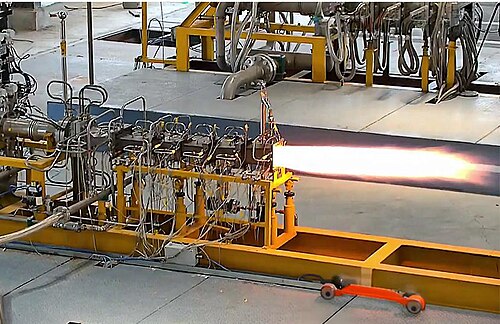
Overview
The Hypersonic Technology Demonstrator Vehicle (HSTDV) is a landmark achievement by India’s Defence Research and Development Organisation (DRDO) aimed at mastering hypersonic cruise missile technology. Serving as a technology demonstrator, the HSTDV is designed to validate critical technologies such as scramjet propulsion, high-speed aerodynamics, thermal management, and guidance control at hypersonic speeds exceeding Mach 6. This program lays the crucial foundation for the development of future indigenous hypersonic weapons capable of rapid, long-range precision strikes.
Hypersonic missiles, traveling at speeds greater than Mach 5, represent the next frontier in missile technology due to their ability to evade existing missile defense systems and reduce enemy reaction times drastically. India’s pursuit of the HSTDV project underscores its strategic intent to maintain technological parity with global powers and enhance its deterrence posture in the Indo-Pacific region. The vehicle’s successful flight tests have demonstrated India’s indigenous capability in scramjet engine technology and hypersonic flight regimes, a feat that positions it among a select group of countries mastering this advanced domain.
The HSTDV program is also a significant milestone in India’s ‘Make in India’ defense initiative, fostering self-reliance in critical aerospace technologies. By developing and testing the hypersonic propulsion system, aerodynamic design, and autonomous navigation systems indigenously, India reduces dependency on foreign technology and strengthens its strategic deterrent options. The knowledge gained from the HSTDV will directly feed into the development of hypersonic cruise missiles and potentially hypersonic glide vehicles in the future.
Specifications
| Parameter | Details |
|---|---|
| Type | Hypersonic Cruise Missile Technology Demonstrator |
| Length | Approx. 6 meters (varies by configuration) |
| Wingspan | Approx. 2 meters |
| Weight | ~1,500 kg (estimated) |
| Propulsion | Indigenous Scramjet engine |
| Maximum Speed | > Mach 6 (Hypersonic regime) |
| Range | ~300 km (demonstrator scale) |
| Launch Platform | Air-launched / Ground-launched (test variations) |
| Guidance System | Autonomous navigation with inertial navigation system (INS) and GPS aided |
| Flight Duration | Approx. 20-30 seconds (test flights) |
| Payload | None (technology demonstrator) |
| Materials | Advanced high-temperature composites and alloys |
| Thermal Protection System | Carbon-carbon composites and ablative coatings |
| Test Flights Conducted | Multiple successful test flights since 2019 |
| Developer | Defence Research and Development Organisation (DRDO) |
Key Features
🚀 Hypersonic Speeds
- Achieves speeds above Mach 6, enabling rapid strike capabilities that drastically reduce enemy response times.
🎯 Indigenous Scramjet Engine
- Features India’s first indigenously developed scramjet engine, which operates efficiently at hypersonic speeds by compressing incoming air without rotating compressors.
💪 Advanced Aerodynamics & Materials
- Utilizes sophisticated aerodynamic design optimized for hypersonic flow and cutting-edge thermal protection materials to withstand extreme heat generated during flight.
🛰️ Flight-Test Validated
- Multiple successful flight tests have proven key technologies including propulsion, control, thermal management, and navigation under real hypersonic conditions.
🇮🇳 Make in India Excellence
- Fully developed and tested by Indian scientists and engineers, showcasing the nation’s growing prowess in strategic missile technologies.
Variants
Currently, the HSTDV is a technology demonstrator and does not have operational variants. However, the program’s success is expected to evolve into the following:
- Hypersonic Cruise Missile: Operational weapon based on HSTDV technology with extended range, payload, and integrated guidance.
- Hypersonic Glide Vehicles (HGV): Potential future development leveraging HSTDV’s aerodynamic and thermal management expertise.
- Air-Launched and Ship-Launched Versions: Variants to extend operational flexibility across different branches of the armed forces.
Operational Status
The HSTDV remains a technology demonstrator and is not yet deployed as an operational weapon system. However, it has undergone multiple successful flight tests starting from its first test in June 2019, validating the scramjet propulsion and hypersonic flight technologies. These tests have been conducted from various launch platforms, including a modified aircraft and ground-based boosters.
The DRDO continues to refine the vehicle’s design and propulsion systems, with the objective of translating these demonstrator technologies into operational hypersonic cruise missiles in the near future. The Indian Armed Forces are closely monitoring the program for integration into their strategic missile arsenals.
Development Timeline
| Date | Milestone |
|---|---|
| June 2019 | First successful flight test of HSTDV; scramjet engine ignition validated at hypersonic speed |
| September 2020 | Second successful flight test; improved scramjet performance and thermal protection demonstrated |
| August 2021 | Third flight test; extended flight duration and autonomous guidance validation |
| October 2023 | Latest test demonstrating sustained scramjet propulsion at Mach 6+ and improved aerodynamic control |
| 2024-2026 | Ongoing enhancements for operational missile development based on HSTDV technology |
Strategic Significance
The HSTDV program is pivotal for India’s strategic and tactical missile capabilities. Hypersonic missiles can penetrate advanced missile defense systems due to their extreme speed and maneuverability, ensuring credible deterrence against adversaries. By mastering hypersonic technology, India joins an elite group of nations, bolstering its status as a major regional power.
This technology demonstrator also enables India to leapfrog existing propulsion technologies and develop a new class of precision-strike weapons that can be deployed in both conventional and nuclear roles. The HSTDV’s indigenous development enhances national security by reducing reliance on foreign missile technology and supports India’s long-term vision of self-reliant defense manufacturing.
Future Upgrades
- Extended Range & Payload: Developing full-scale hypersonic cruise missiles with ranges exceeding 1,000 km and operational warheads.
- Enhanced Maneuverability: Advanced guidance and control systems for evasive maneuvers to defeat missile defenses.
- Multi-Platform Launch: Integration with air, sea, and land launch platforms for versatile deployment.
- Improved Thermal Protection: Next-generation materials to withstand longer hypersonic flight durations.
- Integration with AI & Sensors: Incorporation of AI-based target tracking and adaptive flight path optimization.
Comparison Table
| Feature | HSTDV (India) | BrahMos (India/Russia) | Avangard (Russia) | AGM-183 ARRW (USA) |
|---|---|---|---|---|
| Type | Hypersonic Cruise Missile Demo | Supersonic Cruise Missile | Hypersonic Glide Vehicle | Hypersonic Boost-Glide Weapon |
| Speed | > Mach 6 | Mach 2.8 – 3.0 | Mach 20+ | Mach 20+ |
| Propulsion | Scramjet | Ramjet | None (Glide vehicle) | Rocket boost + glide |
| Range | ~300 km (demo scale) | 290+ km | Intercontinental | Intercontinental |
| Developer | DRDO | DRDO & NPO Mashinostroyeniya | Russian Strategic Missile Forces | U.S. Air Force & DARPA |
| Operational Status | Technology demonstrator | Operational | Operational | Under development |
| Indigenous Content | 100% Indian | Indian-Russian collaboration | Russian | American |
Key Takeaways
- ✅ India’s first successful demonstration of scramjet-powered hypersonic cruise missile technology.
- 🎯 Enables rapid, precise strike capability with speeds above Mach 6, reducing enemy reaction time.
- 💪 Fully indigenous development by DRDO, supporting ‘Make in India’ and strategic autonomy.
- 🛰️ Multiple successful flight tests validating propulsion, thermal management, and guidance.
- 🇮🇳 Paves the way for future operational hypersonic cruise missiles and advanced strategic weapons.
- 🔥 Critical for maintaining technological edge and deterrence in the evolving Indo-Pacific security environment.
Last Updated: March 7, 2026
Status: Technology Demonstrator with ongoing development
Deployment: Under development; no operational deployment yet
Sources & References:
- DRDO official releases and press statements
- Indian Ministry of Defence reports
- “Hypersonic Technology Demonstrator Vehicle (HSTDV)” - The Diplomat, 2019-2023
- Jane’s Defence Weekly analysis, 2024
- Indian Defence Review journal articles on indigenous hypersonic programs