Overview
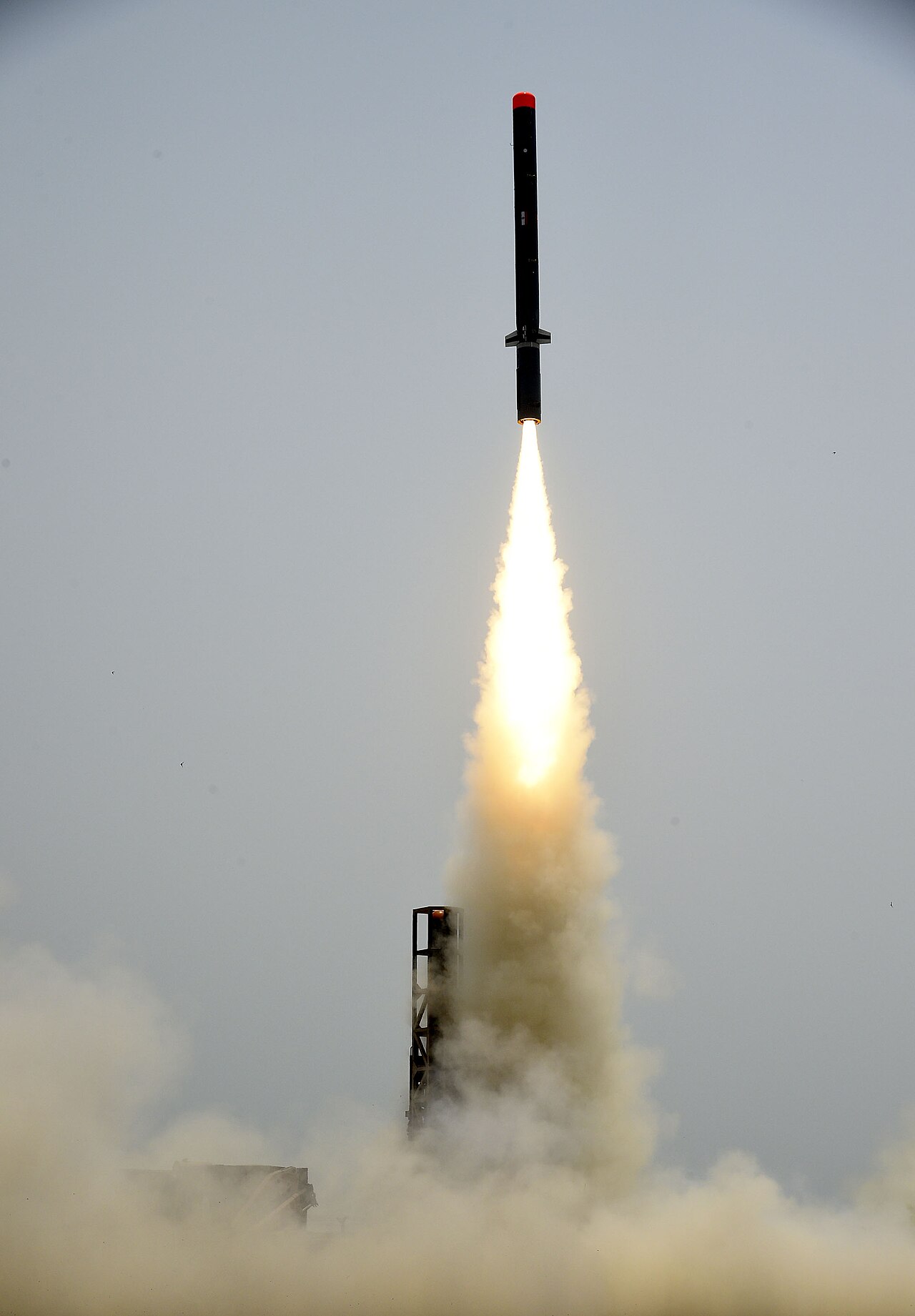
Nirbhay is a state-of-the-art indigenously developed long-range subsonic cruise missile designed by India’s Defence Research and Development Organisation (DRDO). Conceived to provide India with a precision strike capability deep inside enemy territory, Nirbhay enhances strategic deterrence through its ability to deliver conventional or nuclear payloads with pinpoint accuracy at ranges of approximately 1000 kilometers. It is among the few cruise missiles globally that combine terrain-hugging low-altitude flight profiles with advanced guidance systems, enabling it to evade sophisticated air defense networks.
The missile’s design emphasizes modularity and adaptability, allowing deployment from multiple platforms including land-based launchers and naval vessels, significantly increasing operational flexibility. Nirbhay’s subsonic speed paired with a low radar cross-section and terrain-following capability makes it difficult to detect and intercept. This capability fills a crucial gap in India’s missile arsenal by complementing ballistic missile systems and providing options for precision strikes with reduced collateral damage.
Developed entirely under the “Make in India” initiative, Nirbhay stands as a testament to India’s growing indigenous missile development prowess. Its modular architecture ensures that future upgrades such as enhanced engines, guidance systems, and payload options can be integrated without major redesigns. As a result, Nirbhay not only strengthens India’s strategic strike capabilities but also symbolizes the country’s self-reliance in advanced missile technology.
Specifications
| Parameter | Specification |
|---|---|
| Missile Type | Long-Range Subsonic Cruise Missile |
| Length | Approximately 6 meters |
| Diameter | ~0.5 meters |
| Launch Weight | ~1500 kg |
| Range | ~1000 km |
| Speed | Subsonic (~0.7 Mach) |
| Propulsion | Turbofan engine with solid rocket booster for launch |
| Guidance System | Inertial Navigation System (INS), GPS, Terrain Contour Matching (TERCOM), Radar Altimeter, Active Radar Homing (terminal phase) |
| Warhead | Conventional (high explosive) or nuclear (classified) |
| Warhead Weight | ~200-300 kg (estimated) |
| Flight Profile | Terrain hugging, sea-skimming, low altitude |
| Launch Platforms | Land-based TEL, ships (future submarine launch capability in development) |
| Manufacturer | Defence Research and Development Organisation (DRDO) / Indian industry partners |
| Operational Range | Classified, but public estimates ~1000 km |
| Accuracy (CEP) | Less than 10 meters |
| Guidance Updates | Mid-course updates via data link (classified) |
Key Features
🚀 Long-Range Precision Strike
Nirbhay delivers precision strikes at ranges of around 1000 km, enabling deep penetration into enemy territory while engaging strategic targets with high accuracy.
🎯 Terrain-Hugging Low Altitude Flight
The missile employs low radar cross-section and terrain contour matching technology to fly at low altitudes, evading radar detection and air defense systems effectively.
🛡️ Multi-Platform Launch Capability
Designed for launch from multiple platforms including land vehicles and naval ships, Nirbhay enhances operational flexibility and survivability in varied combat scenarios.
🔧 Indigenous and Modular Design
Developed under the Make in India initiative, Nirbhay’s modular architecture allows future upgrades in propulsion, guidance, and payload without major redesign efforts.
Variants
| Variant | Description |
|---|---|
| Nirbhay (Baseline) | Standard long-range subsonic cruise missile with conventional warhead and INS/GPS guidance. |
| Nirbhay Naval Variant | Under development; designed for launch from Indian Navy surface ships and eventually submarines. |
| Future Nuclear Variant | Potential capability for nuclear payload integration (classified status). |
Operational Status
Nirbhay has undergone multiple successful test flights since its maiden flight in 2013, with iterative improvements addressing stability and guidance challenges. As of early 2026, the missile is in advanced stages of induction with the Indian Armed Forces, primarily with the Indian Army and the Indian Navy. Integration with land-based launch platforms is complete, while naval and submarine launch capabilities are under development and testing phases.
The missile complements India’s existing ballistic missile arsenal by providing a stealthy, low-altitude, and precise strike option. It is expected to be deployed along sensitive borders and on naval platforms to enhance response options during conflict scenarios.
Development Timeline
| Year | Milestone |
|---|---|
| 2006 | Project Nirbhay conceptualized and approved by DRDO. |
| 2013 | Maiden test flight conducted successfully. |
| 2014-2016 | Series of test flights with mixed results; improvements made to guidance and propulsion systems. |
| 2018 | Successful test flight demonstrating terrain-hugging and low-altitude cruise capability. |
| 2020 | Integration trials with land-based launch platforms. |
| 2022 | Commencement of naval variant development and testing. |
| 2025 | Confirmed induction into Indian Armed Forces with initial operational capability. |
| 2026 | Ongoing tests for submarine launch capability and payload diversification. |
Strategic Significance
Nirbhay significantly enhances India’s strategic deterrence by filling the capability gap for a reliable long-range subsonic cruise missile. Unlike ballistic missiles that follow predictable trajectories, Nirbhay’s terrain-hugging flight path makes interception very challenging, thereby increasing survivability and strike success rates. This capability is crucial in a regional security environment marked by advanced air defense systems deployed by potential adversaries.
Moreover, the missile’s indigenous development underscores India’s commitment to self-reliance in defense technology, reducing dependence on foreign suppliers for critical strategic assets. Its versatility for multiple launch platforms, including future submarine launches, adds a crucial dimension to India’s second-strike capability, ensuring credible deterrence in the nuclear domain.
The missile also serves as a strategic tool for conventional conflict scenarios, enabling precision strikes on high-value targets with minimal collateral damage, thus supporting India’s doctrine of calibrated and proportionate response.
Future Upgrades
- Enhanced Propulsion: Development of more efficient turbofan engines to extend range beyond 1500 km.
- Improved Stealth: Integration of advanced radar-absorbent materials to further reduce radar cross-section.
- Advanced Guidance: Incorporation of next-generation navigation systems including satellite-based augmentation for enhanced accuracy.
- Payload Diversification: Capability to carry specialized warheads including electronic warfare payloads and bunker-busting munitions.
- Submarine Launch Capability: Finalization of canisterized versions for underwater launch from Indian nuclear and conventional submarines.
- Network-Centric Integration: Real-time data link for mid-course updates and target re-designation in dynamic battlefield environments.
Comparison Table
| Feature | Nirbhay | BrahMos (Supersonic Cruise) | Tomahawk (US Subsonic Cruise) |
|---|---|---|---|
| Speed | Subsonic (~0.7 Mach) | Supersonic (~2.8-3.0 Mach) | Subsonic (~0.7 Mach) |
| Range | ~1000 km | ~400 km | ~1600+ km |
| Launch Platforms | Land, Sea (naval variant in progress) | Land, Sea, Air | Land, Sea, Submarine |
| Warhead Types | Conventional/Nuclear | Conventional | Conventional |
| Guidance System | INS/GPS/TERCOM/Active Radar | INS/GPS/Active Radar | INS/GPS/TERCOM/Active Radar |
| Indigenous Status | Fully Indigenous (DRDO) | Indo-Russian Joint Venture | Foreign (US made) |
| Flight Profile | Terrain hugging, low altitude | High speed, sea-skimming | Terrain hugging, sea-skimming |
Key Takeaways
- ✅ Nirbhay provides India with a domestically developed, long-range subsonic cruise missile capable of precision strikes up to 1000 km.
- 🎯 Its terrain-hugging flight profile and low radar cross-section enable evasion of advanced air defenses.
- 💪 Multi-platform launch capability enhances operational flexibility and strategic reach.
- 🇮🇳 Embodies India’s commitment to indigenous defense technology under the Make in India initiative.
- 🔧 Modular design allows easy integration of future upgrades including nuclear payloads, advanced guidance, and submarine launch capability.
- 🚢 Naval and submarine variants under development will add critical second-strike capabilities.
- 🛡️ Strengthens India’s strategic deterrence by complementing ballistic missile systems with stealthy, precise, and flexible strike options.
Last updated: February 2026 | Status: Operational with Indian Armed Forces (Land variant); Naval and Submarine variants under development | Deployment: Indian Army and Indian Navy