Overview
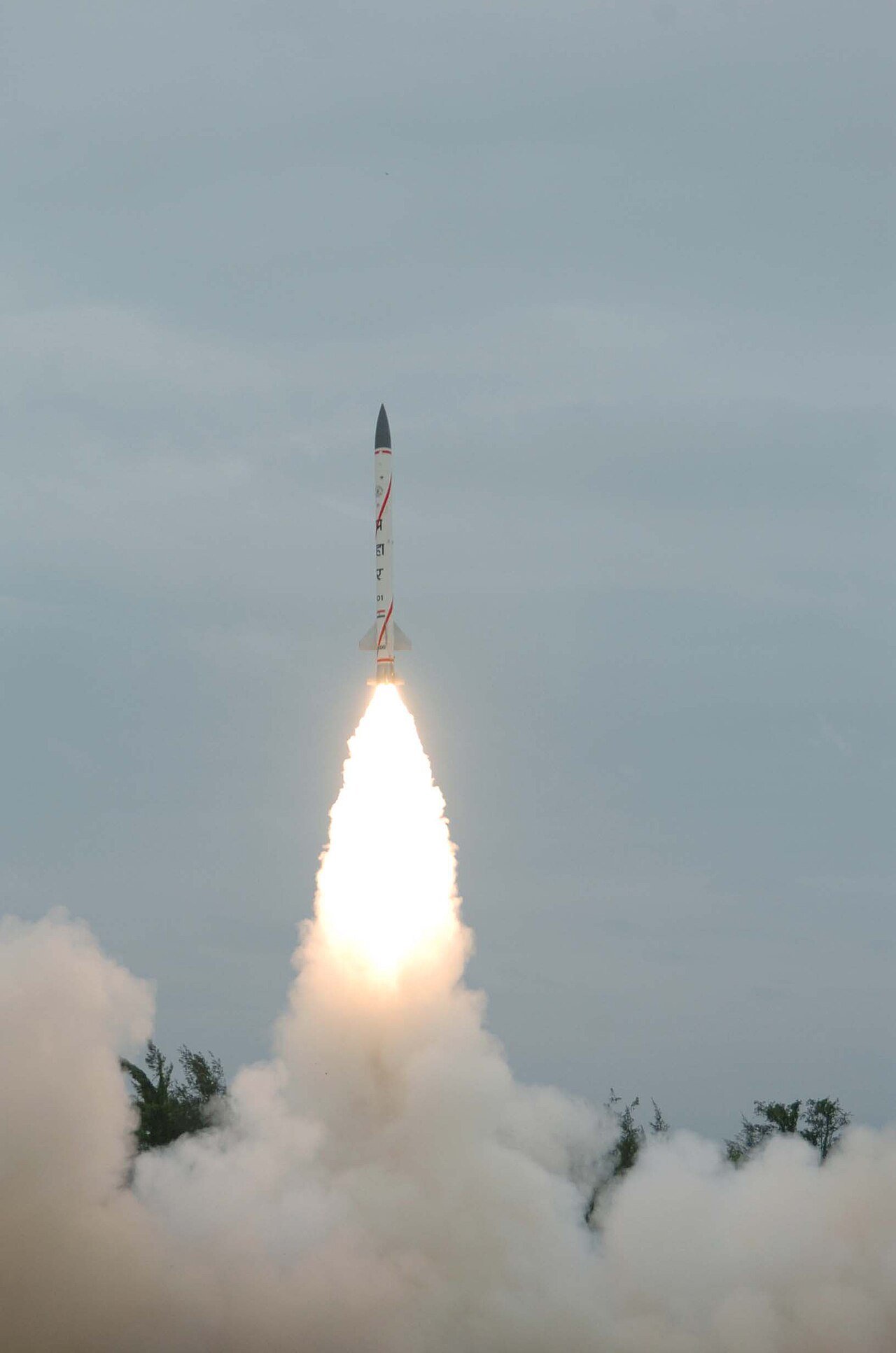
The Prahaar Tactical Ballistic Missile is a key component of India’s battlefield arsenal, developed by the Defence Research and Development Organisation (DRDO) to provide rapid, precise strike capability at short ranges. Designed to fill the capability gap between conventional artillery rockets and longer-range ballistic missiles, Prahaar offers the Indian Armed Forces a highly mobile, quick-reaction weapon system capable of engaging tactical targets with high accuracy. This missile enhances battlefield lethality and responsiveness, ensuring that the Indian military can effectively counter emerging threats in a dynamic combat environment.
Prahaar is a solid-fueled missile with a range of approximately 150 kilometers, making it ideal for striking high-value targets such as enemy command posts, air defense installations, and logistical nodes. It replaces the aging liquid-fueled Prithvi-I missile systems, offering greater operational flexibility and survivability due to its road-mobile launcher platform. The missile’s quick launch readiness and precision guidance system allow forces to execute swift counterattacks, thereby significantly improving the tactical strike capabilities of India’s missile arsenal.
Indigenously developed under the Make in India initiative, Prahaar underscores India’s growing self-reliance in missile technology. Its successful deployment represents a strategic leap in tactical missile technology, combining advanced solid propulsion with sophisticated inertial navigation and terminal guidance systems, thereby ensuring high accuracy and reliability in diverse battlefield conditions.
Specifications
| Parameter | Details |
|---|---|
| Type | Tactical Ballistic Missile |
| Developer | DRDO |
| Range | ~150 km |
| Warhead | Conventional High Explosive (HE) |
| Warhead Weight | ~200 kg (approximate) |
| Propulsion | Solid Propellant |
| Length | ~7.32 meters |
| Diameter | ~0.42 meters |
| Launch Platform | Mobile road launcher (Tata 8x8 or equivalent) |
| Guidance System | Inertial Navigation System (INS) with GPS aided terminal guidance |
| Accuracy (CEP) | <10 meters |
| Launch Readiness Time | Minutes (quick reaction capability) |
| Mobility | High (Road-mobile launcher) |
| Operational Range | Day and night, all weather |
| Deployment Status | Active service with Indian Army |
Key Features
🚀 Rapid Reaction and Mobility
- Quick launch readiness enables missile deployment within minutes of receiving orders.
- Mounted on highly mobile road-mobile launchers, offering battlefield flexibility and survivability.
🎯 Precision Targeting
- Advanced inertial navigation combined with GPS-aided terminal guidance ensures high accuracy with a CEP of less than 10 meters.
- Capable of striking tactical targets deep behind enemy lines with minimal collateral damage.
🛡️ Indigenous Development and Reliability
- Completely developed and manufactured in India by DRDO under the Make in India initiative.
- Solid-propellant motor offers better reliability, reduced maintenance, and faster launch preparation compared to older liquid-fueled missiles.
Variants
| Variant | Description |
|---|---|
| Prahaar | Baseline tactical ballistic missile with a range of ~150 km and conventional warhead. |
| Prahaar Extended | Proposed variant with enhanced range up to 200 km under development (not yet operational). |
Operational Status
Prahaar missiles have been inducted into the Indian Army and are currently deployed in various strategically sensitive sectors along India’s borders. The system is operationally integrated for rapid response and tactical strike missions, complementing other missile systems like the BrahMos and Prithvi series. Its mobility and quick reaction time have been validated in multiple field trials and exercises, proving its effectiveness in real combat scenarios.
Development Timeline
| Year | Milestone |
|---|---|
| 2011 | Project conceptualization and initial design initiation by DRDO |
| 2013 | Successful first flight test of Prahaar missile |
| 2015 | Series of user trials and validation launches conducted |
| 2016 | Official induction into Indian Army missile arsenal |
| 2018 | Upgraded guidance system and launcher platform enhancements introduced |
| 2023 | Development of extended range variant initiated |
Strategic Significance
The Prahaar missile fills a critical tactical gap in India’s missile inventory by providing a rapid, precision strike capability at short ranges where artillery rockets lack range and ballistic missiles are too large or slow to deploy. Its indigenous design ensures strategic autonomy and reduces dependence on foreign suppliers. Prahaar’s ability to be launched from mobile platforms enhances battlefield survivability and deterrence, enabling the Indian Army to conduct swift, targeted counterstrikes against enemy formations, command centers, and logistical nodes.
By bridging the gap between artillery rockets and longer-range ballistic missiles, Prahaar strengthens India’s layered missile defense and offensive posture. It plays a vital role in India’s doctrine of swift, surgical strikes that aim to incapacitate adversary capabilities before full-scale conflict escalates. Furthermore, the missile’s precision reduces collateral damage, aligning with modern warfare’s emphasis on minimizing civilian casualties.
Future Upgrades
- Extended Range Variant: Development of a Prahaar Mk II with increased range up to 200 kilometers is underway to enhance operational reach.
- Enhanced Warhead Options: Integration of modular warheads including cluster munitions and sensor-fuzed submunitions for versatile battlefield applications.
- Improved Guidance: Incorporation of advanced navigation aids like terrain contour matching (TERCOM) and terminal imaging seekers for increased accuracy.
- Network-Centric Integration: Enhanced communication and data link capabilities for real-time targeting updates and integration with battlefield management systems.
Comparison Table
| Feature | Prahaar | Prithvi-I | Pinaka (Rocket System) |
|---|---|---|---|
| Range | ~150 km | ~150 km | 40-75 km |
| Propulsion | Solid Propellant | Liquid Propellant | Solid Propellant |
| Launch Platform | Mobile road launcher | Mobile launcher | Mobile launcher |
| Guidance | INS + GPS aided terminal | INS | Unguided / Limited guidance |
| Warhead Type | Conventional HE | Conventional HE | Conventional HE |
| Accuracy (CEP) | <10 meters | ~50 meters | ~30-50 meters |
| Reaction Time | Minutes | Hours (due to liquid fuel) | Minutes |
| Indigenous Development | Fully indigenous (DRDO) | Partially indigenous | Fully indigenous |
Key Takeaways
- ✅ Bridges the tactical gap between artillery rockets and ballistic missiles.
- 🎯 High precision targeting with CEP less than 10 meters.
- 💪 Solid propellant technology ensures rapid launch and reliability.
- 🚛 Highly mobile launchers provide battlefield flexibility and survivability.
- 🇮🇳 100% indigenous development under the Make in India initiative.
- 🕒 Quick reaction time allows swift counterstrike capabilities.
- 🔄 Future upgrades will enhance range, guidance, and warhead versatility.
Last updated: February 22, 2026
Status: Active service with Indian Army
Deployment: Multiple frontline units along western and northern borders
Sources & References:
- DRDO official releases and publications
- Indian Army defense procurement reports
- Jane’s Defence Weekly, Missile Systems Analysis 2025
- Press Information Bureau (PIB), Government of India
- Defence News and Strategic Analysis Journals