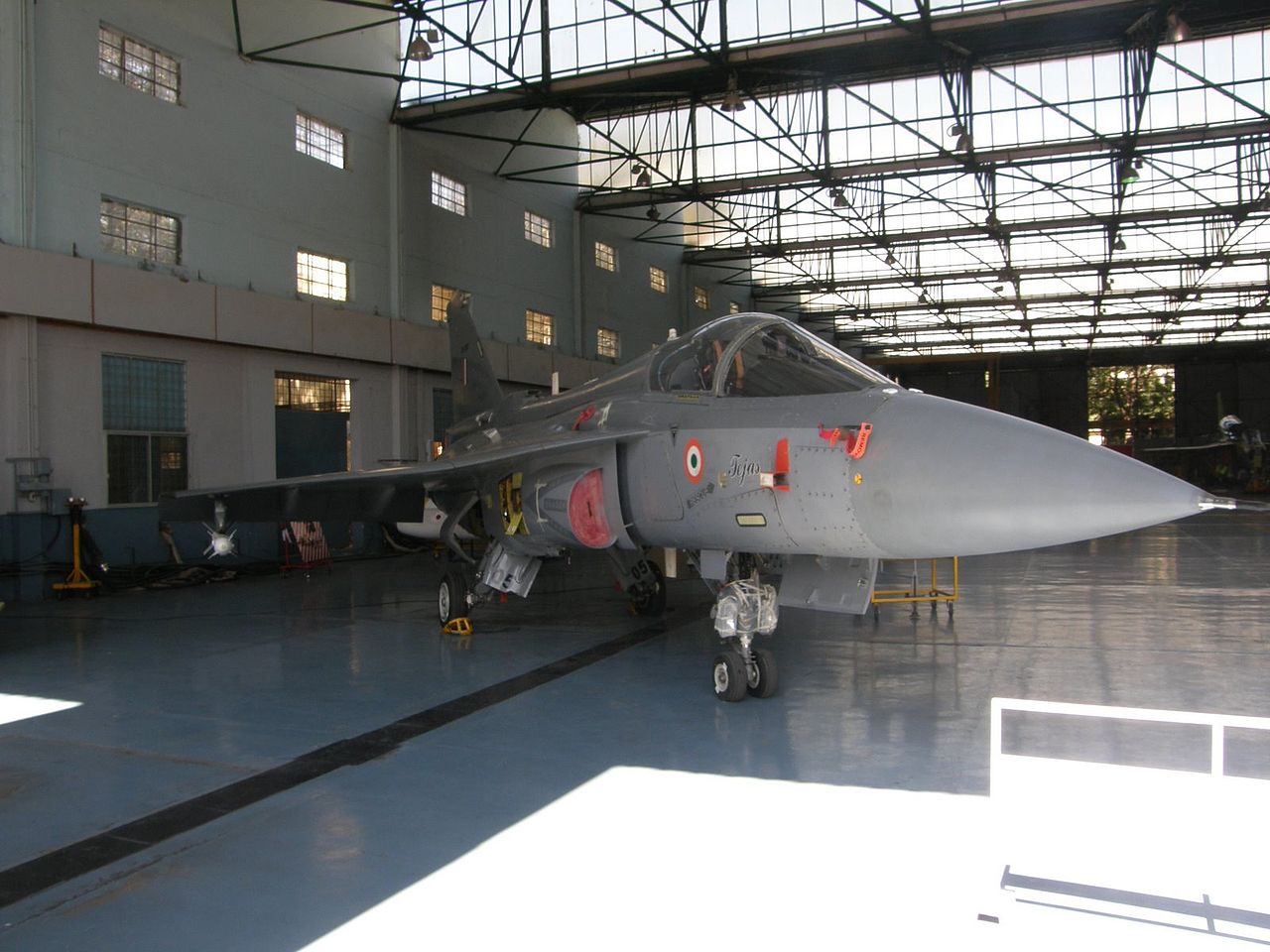
Overview
The Tejas Mk1 Trainer is a two-seat variant of the Tejas light combat aircraft (LCA), developed by Hindustan Aeronautics Limited (HAL) in collaboration with the Aeronautical Development Agency (ADA). Designed primarily for advanced pilot training, the Mk1 Trainer enables Indian Air Force (IAF) pilots to train on an indigenous platform that replicates the handling, avionics, and systems of frontline Tejas fighters. This ensures a seamless transition from training to combat operations, significantly enhancing operational efficiency.
Developed as part of the Make in India initiative, the Tejas Mk1 Trainer underscores India’s commitment to self-reliance in defense aviation. It integrates modern avionics, fly-by-wire controls, and mission systems similar to the single-seat Tejas Mk1, but with modifications for dual control and enhanced instructor oversight. The aircraft serves as a cost-effective platform for training pilots in combat maneuvers, weapons deployment, and advanced navigation, directly supporting the Indian Air Force’s modernization goals.
The Tejas Mk1 Trainer entered service to address the urgent need for an indigenous advanced trainer capable of supporting the growing fleet of Tejas fighters. It reduces IAF dependence on foreign trainer aircraft and contributes to the development of a robust ecosystem around India’s Light Combat Aircraft program. The platform is also a stepping stone towards the more advanced Tejas Mk1A and Mk2 variants, facilitating pilot familiarization with the Tejas family of aircraft.
Specifications
| Parameter | Specification |
|---|---|
| Aircraft Type | Advanced Trainer Fighter Aircraft |
| Manufacturer | Hindustan Aeronautics Limited (HAL) |
| Crew | 2 (Student Pilot + Instructor) |
| Length | 13.2 meters |
| Wingspan | 8.2 meters |
| Height | 4.4 meters |
| Empty Weight | Approx. 6,100 kg |
| Maximum Takeoff Weight | 13,500 kg |
| Powerplant | 1 × General Electric F404-GE-IN20 turbofan engine |
| Thrust | 84 kN (18,000 lbf) maximum afterburner thrust |
| Maximum Speed | Mach 1.6 (approx. 1,960 km/h at altitude) |
| Service Ceiling | 15,200 meters (50,000 feet) |
| Range | 1,850 km (combat radius ~500 km) |
| Avionics | Multi-mode radar, glass cockpit, HUD, fly-by-wire |
| Armament | Capability to carry training munitions and practice bombs; limited weapons load for training |
| Landing Gear | Retractable tricycle type |
| Flight Control | Digital fly-by-wire system |
Key Features
🚀 Indigenous Two-Seater Trainer
- Twin-seat cockpit with dual controls designed for pilot and instructor.
- Enables realistic training on a platform closely mirroring operational fighters.
🎯 Advanced Avionics and Systems
- Equipped with state-of-the-art avionics including multi-mode radar and digital fly-by-wire controls.
- Glass cockpit with Head-Up Display (HUD) and Multi-Function Displays (MFDs) similar to frontline Tejas.
💰 Cost-Effective Training Solution
- Reduces reliance on foreign advanced trainers.
- Enables extensive pilot training within the Indian Air Force infrastructure, lowering operational costs.
🇮🇳 Make in India Initiative
- Fully developed and manufactured indigenously by HAL and ADA.
- Supports self-reliance in defense aviation and boosts local aerospace industry.
Variants
| Variant | Description |
|---|---|
| Tejas Mk1 Trainer | Initial two-seat advanced trainer variant of Tejas Mk1, optimized for training and familiarization. |
| Tejas Mk1A Trainer | Planned upgraded version with enhanced avionics and improved cockpit ergonomics, matching Mk1A frontline fighters. (Under development) |
Operational Status
The Tejas Mk1 Trainer was formally inducted into the Indian Air Force starting in 2012, with initial deliveries to No. 44 Squadron (the ‘Flying Daggers’) and No. 18 Squadron (the ‘Flying Bullets’). It is actively used for training fighter pilots transitioning to the single-seat Tejas Mk1 aircraft. The trainer has undergone extensive flight testing and operational evaluation, demonstrating reliability and effectiveness as a lead-in fighter trainer.
The aircraft supports multiple Indian Air Force training bases and has been integrated into IAF’s pilot training syllabus for light combat aircraft. Its deployment has significantly enhanced pilot throughput for the Tejas fleet and is a critical element in the IAF’s indigenous fighter ecosystem.
Development Timeline
| Year | Milestone |
|---|---|
| 2007 | First flight of Tejas Mk1 Trainer prototype |
| 2010 | Completion of initial flight testing phase |
| 2012 | Initial induction into Indian Air Force |
| 2015 | Operational Evaluation (OPEVAL) completed |
| 2018 | Full operational clearance (FOC) for Tejas Mk1 Trainer |
| 2020 | Ongoing delivery of additional trainer aircraft |
| 2024+ | Development of Tejas Mk1A Trainer variant underway |
Strategic Significance
The Tejas Mk1 Trainer is a linchpin in India’s efforts to build an indigenous fighter aircraft ecosystem. By providing advanced training on a domestic platform, it reduces reliance on foreign trainers and creates a sustainable pipeline of pilots ready to operate India’s frontline fighters. This aligns with the Indian government’s Make in India and Atmanirbhar Bharat initiatives, reinforcing self-reliance in critical defense technologies.
The trainer’s similarity to the single-seat Tejas ensures minimal transition time for pilots moving to operational combat aircraft, enhancing the Indian Air Force’s combat readiness and overall force multiplier effect. It also boosts the indigenous aerospace industry by fostering expertise in advanced fighter avionics and flight systems.
Future Upgrades
- Tejas Mk1A Trainer: Planned upgrade featuring improved avionics, enhanced cockpit ergonomics, and integration of newer mission systems to match the Mk1A frontline fighters.
- Simulation Integration: Enhanced ground-based simulators linked with the trainer aircraft for comprehensive pilot training.
- Expanded Weapon Simulation: Incorporation of more sophisticated weapon delivery training modules and electronic warfare systems.
- Engine Upgrades: Possible integration of improved engine variants to match future Tejas Mk2 engine performance, ensuring training relevance.
Comparison Table
| Feature | Tejas Mk1 Trainer | Hawk AJT (Current IAF Trainer) | K-8 Karakorum (IAF Basic Trainer) |
|---|---|---|---|
| Aircraft Type | Advanced Trainer Fighter | Advanced Jet Trainer (AJT) | Basic Jet Trainer |
| Crew | 2 | 2 | 2 |
| Engine | 1 × GE F404-GE-IN20 | 1 × Rolls-Royce Adour | 1 × Ivchenko AI-25 |
| Max Speed | Mach 1.6 | Mach 0.84 | Mach 0.8 |
| Avionics | Modern glass cockpit, multi-mode radar | Analog/digital cockpit | Basic analog cockpit |
| Indigenous Content | ~70% Indigenous | Imported | Imported |
| Role | Lead-In Fighter Trainer | Advanced Jet Trainer | Basic Trainer |
| Operational Since | 2012 | 1990s (IAF inducted) | 2000s (IAF inducted) |
Key Takeaways
- ✅ Indigenous dual-seat advanced trainer designed to support the Tejas LCA fleet.
- 🎯 Provides seamless transition for pilots moving to frontline fighters.
- 💪 Enhances self-reliance under Make in India and Atmanirbhar Bharat initiatives.
- 🚀 Equipped with advanced avionics and fly-by-wire controls simulating combat operations.
- 🇮🇳 Integral to India’s growing aerospace and defense manufacturing ecosystem.
- 🎓 Supports cost-effective, efficient pilot training within Indian Air Force infrastructure.
Last updated: March 2026
Status: Operational in Indian Air Force
Deployment: Active with multiple IAF squadrons at training bases across India
Sources & References:
- Hindustan Aeronautics Limited (HAL) official publications
- Aeronautical Development Agency (ADA) press releases
- Indian Air Force public information bulletins
- Defence Research and Development Organisation (DRDO) reports
- Jane’s All the World’s Aircraft 2025–2026
- “Tejas Light Combat Aircraft” – FlightGlobal archives
- Press Information Bureau (PIB) India Defense Releases